
Laurier Noble monograph
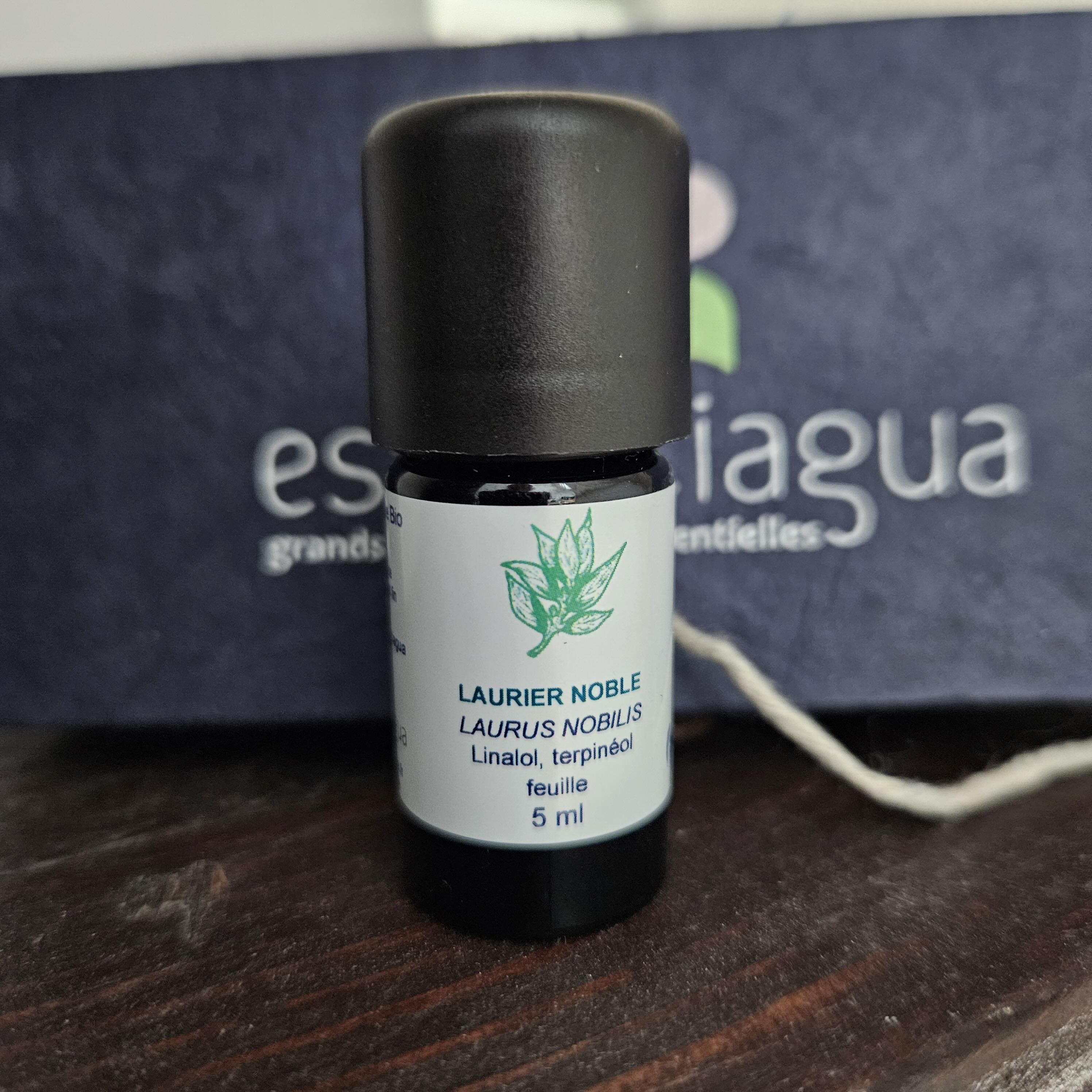
Laurier Noble
Plant identification and botany
- Latin botanical name: Laurus nobilis L.
- Chemotype (CT): 1,8-cineole, linalool, terpenyl acetate
- Botanical family: Lauraceae (Lauraceae)
- Varnacular names: Laurier noble, Laurier d'Apollon, Laurier-sauce, Laurier vrai.
- Part of plant distilled:Leaves
- Geographical origin: Mainly Mediterranean basin (France, Spain, Morocco, Croatia, Turkey).
Essential oil characteristics
Production method: Complete distillation by steam distillation.
Organoleptic characteristics:
- Appearance:Very fluid and mobile liquid.
- Color: Colorless to pale greenish yellow.
- Smell:Fresh, powerful, spicy, kineolated and camphorated, with a slightly bitter and noble base note.
Physicochemical characteristics (indicative):
- Relative density (at 20°C): 0.905 to 0.925
- Refractive index (at 20°C): 1.465 to 1.475
- Rotatory power: -10° to -22°
- Flash point: >55°C
Detailed biochemical composition
Composition may vary slightly depending on origin and harvesting period. A typical chromatographic profile (GC/MS) reveals:
- Terpenic oxides (35-55%):
- 1,8-cineole (eucalyptol): majority, responsible for expectorant and antiviral properties.
- Monoterpenols (10-20%):
- Linalool, a-terpineol: confer antibacterial, antifungal and nerve-regulating properties.
Terpenic esters (8-15%): - Terpenyl acetate: contributes to antispasmodic and calming action.
- Monoterpenes (10-15%):
- a-pinene, ß-pinene, sabinene: atmospheric antiseptic action.
- Phenols:
- Methyl-eugenol (generally < 5%)
- Eugenol (generally < 3%)
Sesquiterpenic lactones (traces): - Costunolide, laurenobiolide: may be responsible for allergic skin reactions.
- Purposeful anti-infective: powerful antibacterial, antiviral and antifungal.
- Expectorant and mucolytic: thins mucus and promotes its expulsion.
- Remarkable analgesic and antineuralgic: soothes pain, particularly joint, muscle and dental pain.
- Nervous system regulator: rebalancing, promotes self-confidence and concentration.
- Antispasmodic.
- Cutaneous tonic and astringent.
- EAR and respiratory sphere: Flu, bronchitis, sinusitis, colds, winter viral ailments.
- Pain and rheumatology: Arthritis, rheumatism, polyarthritis, neuralgia, muscle aches and cramps.
- Oral care: Mouth ulcers, gingivitis, dental abscesses (local external application), bad breath.
- Skin care: Acne, boils, skin mycoses, oily skin.
- Nervous system and psycho-emotional care: Anxiety, lack of confidence, preparation for exams or competitions (helps concentration and stress management).
- Pregnant and breastfeeding women.
- Children under 6 (due to high 1,8-cineole content, risk of laryngeal spasm in infants).
- People with asthma (especially pure inhalation or diffusion) and epilepsy.
- Risk of skin sensitization: May cause skin allergies in sensitive subjects due to the presence of lactones. Always perform a skin test in the crease of the elbow 24 hours before use.
- Cutaneous irritation (dermocausticity): Use undiluted on the skin is not recommended. Dilution in a vegetable oil is mandatory for all skin applications.
- Oral route: Reserved for prescription by an authorized healthcare professional.
- Avoid direct contact with eyes and mucous membranes.
- Allergenic biochemical constituents (according to EC Cosmetic Regulation n°1223/2009): Linalool, limonene, eugenol.
- Localized pain (arthritis, neuralgia): Dilute 3 to 5 drops of EO in 10 drops of vegetable oil (e.g. arnica oily macerate) and massage the painful area 3 times a day.
- Respiratory ailments: Dilute 10-20% in a vegetable oil and massage the thorax, upper back and soles of the feet.
- Acne: 1 drop on a cotton bud to be applied very locally to the pimple, after performing a sensitivity test.
- A few drops in a diffuser for 15-20 minutes to purify the air or promote concentration.
- Do not diffuse in a child's room.
- ENTL infections: with Eucalyptus radiata, Ravintsara.
- Pain: with Gaultheria procumbens, Eucalyptus citriodora.
- Fungal infections: with Tea Tree, Palmarosa.
- HEBBD: Botanically and Biochemically Defined Essential Oil.
- HECT: Chemotyped Essential Oil.
- Preferably oils from organic farming (AB label, Ecocert).
Therapeutic properties and indications
Principal properties:
Indications and spheres of action:
Safety and toxicology data
Toxicity: Low at recommended physiological doses.
Strict contraindications:
Precautions for use:
Administration routes, dosages and uses
Cutaneous route (preferred):
Oral route:
Only on medical or pharmaceutical advice.
Atmospheric diffusion:
Inhalation:
Dry inhalation: 1 to 2 drops on a tissue to breathe deeply in case of a blocked nose or need for concentration.
Examples of synergies:
Regulatory and quality aspects
CAS number: 84603-73-6
Recommended quality labels:
Reference bibliography: The information in this sheet is based on scientific aromatherapy reference works (e.g. P. Franchomme, D. Baudoux, M. Faucon).
Disclaimer: This monograph is intended for healthcare professionals. The information it contains is in no way intended as a substitute for medical consultation. The use of essential oils for therapeutic purposes requires medical advice.
- Choosing a selection results in a full page refresh.
- Opens in a new window.