


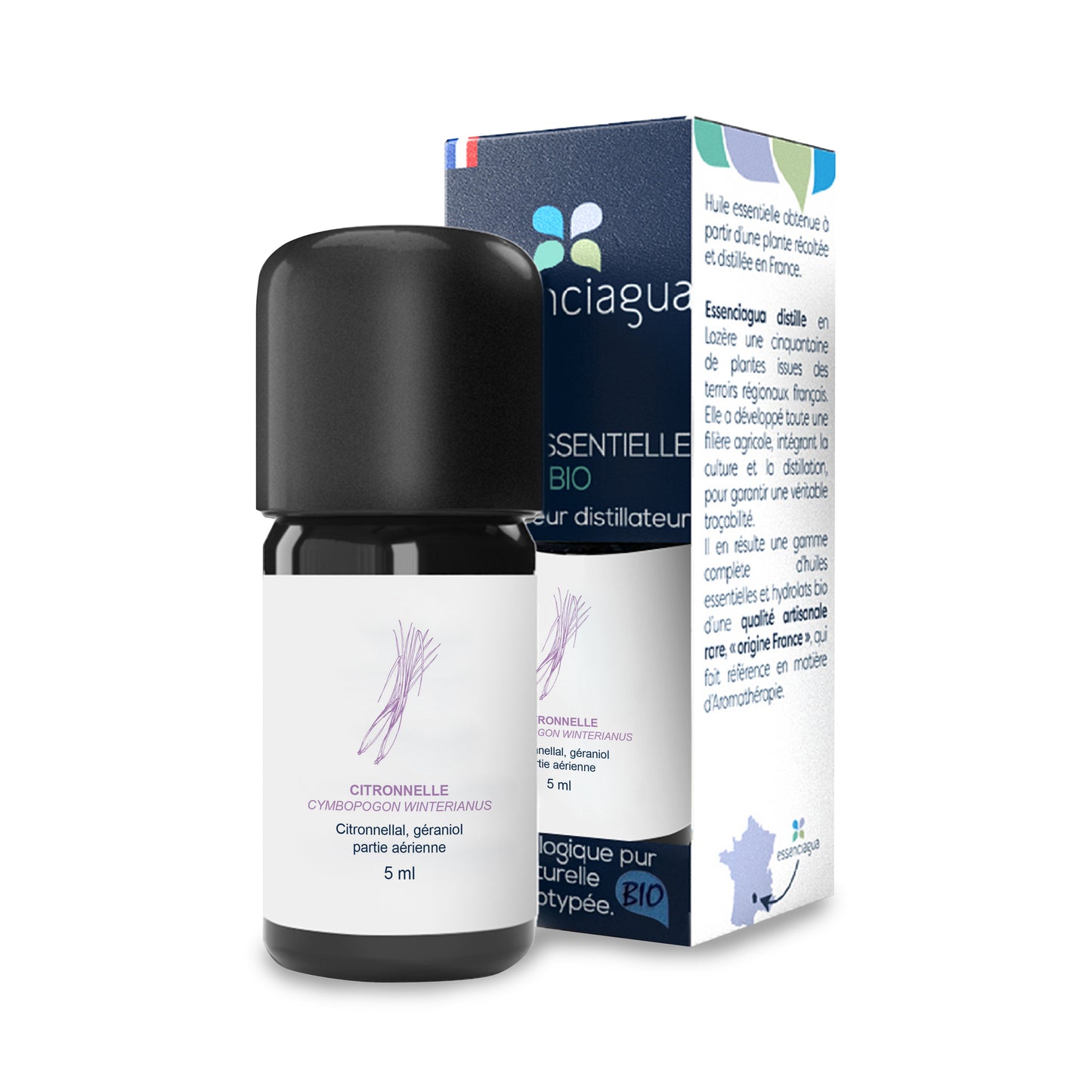
Découvrez notre Citronella Essential Oil 100% Organic and Handcrafted
Citronella (Cymbopogon Nardus) is an emblematic aromatic herb from the tropical regions of Asia, where it is traditionally cultivated for its olfactory qualities. Valued for centuries, this perennial plant is known for its refreshing properties and its distinctive fragrance, which has transcended cultures and eras.
Essenciagua’s Citronella Essential Oil, derived from this plant, reveals a unique olfactory profile. Its aroma, both fresh and intensely lemony, is subtly enhanced with herbaceous and green notes. It is a true invitation to create a light and purifying atmosphere in your living space. This invigorating fragrance evokes clarity and serenity, offering a sensation of olfactory well-being and a harmonious ambiance, ideal for refreshing and revitalizing the environment.
 Agriculture Biologique : label français garantissant un mode de production respectueux de l'environnement, sans pesticides ni engrais chimiques de synthèse.
La Plante Lemongrass
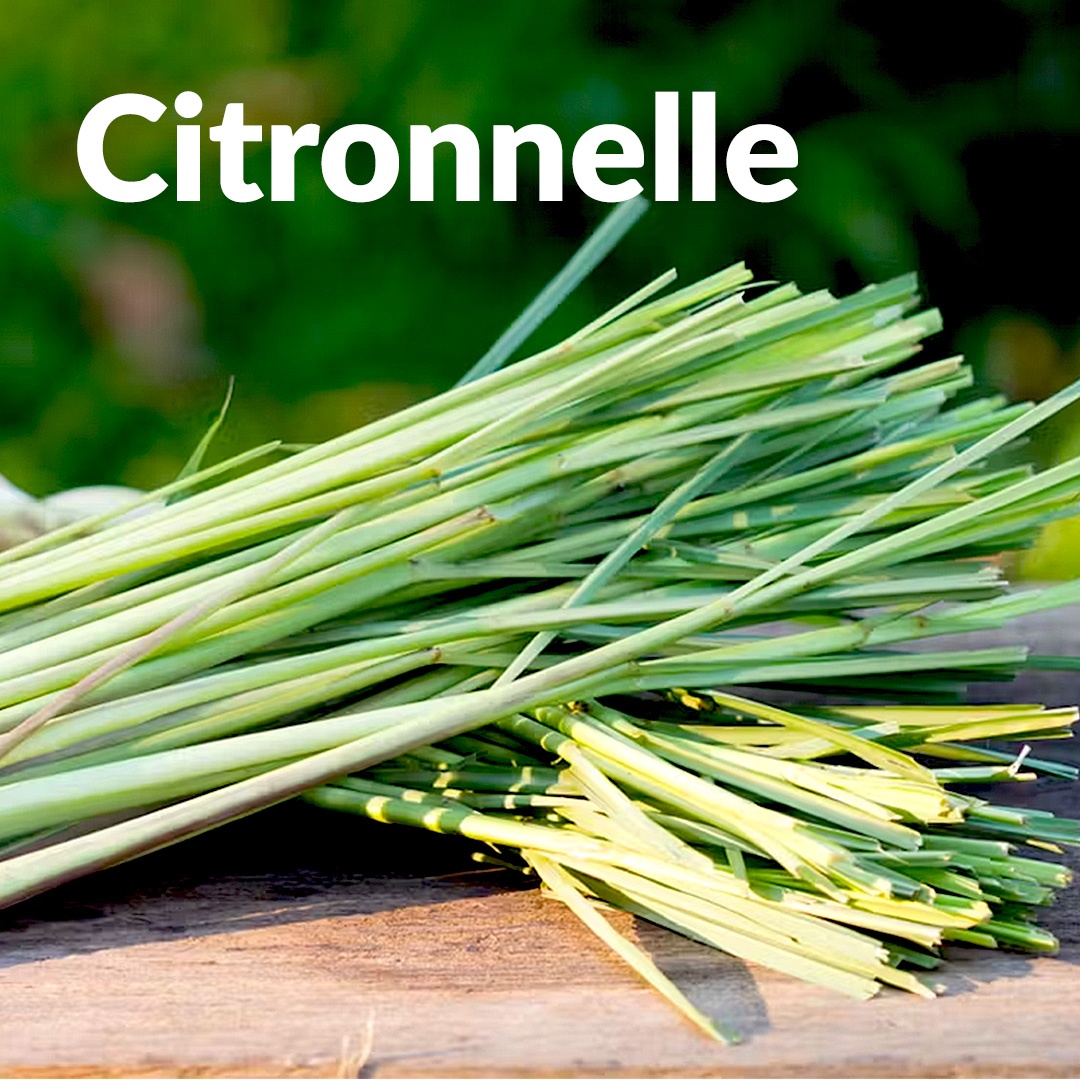
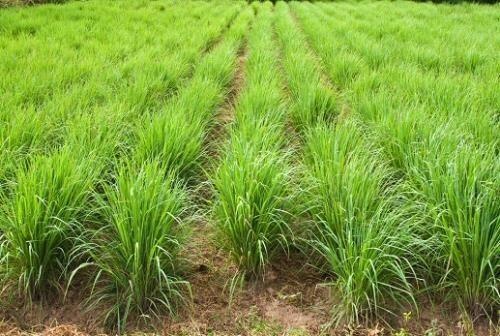
Partie de la plante: Flowering Summit
Origine: Nepal
Lemongrass, whose scent is reminiscent of lemon, is a tropical herbaceous plant with long, narrow, erect leaves. Not belonging to the same family, it is often confused with Lemon balm, which is common in our regions. Although the medicinal properties of Lemongrass have been known since ancient Egypt, the plant has been used for even longer on the Indian subcontinent. In the West Indies, Citronella is a traditional fever-reducing remedy, while in Africa it is used to treat ailments such as tuberculosis and malaria. In tropical countries, it is often planted around houses to keep insects away. It can also be used effectively to repel mosquitoes.
Publications scientifiques
Une sélection d'études issues de PubMed portant sur cette plante.
-
Lemongrass essential oil attenuates nasal hyperresponsiveness induced by Japanese cedar pollen in mice.
A study in mice showed that lemongrass essential oil reduced nasal allergic responses and nasal hyperreactivity induced by Japanese cedar pollen.
-
Nanoencapsulated EO-based drug delivery for pest control: from chemistry to formulation design.
This scientific review examines the potential of essential oils as biopesticides. It highlights how nanoencapsulation can improve their effectiveness and stability for sustainable pest management.
-
Enhancing salinity stress tolerance in lemongrass (Cymbopogon citratus L.) using foliar-applied silicon nanoparticles.
This study showed that the application of silicon nanoparticles helped lemongrass better tolerate salt stress, improving its growth, yield, and the quality of its essential oil.
-
Development and in vitro Antifungal Evaluation of a Ternary Essential Oil-Based Oral Phytopharmaceutical Formulation Against Candida albicans .
An in vitro study showed that a formulation of essential oils from lemongrass, cilantro, and oregano exhibited significant antifungal activity against Candida albicans, outperforming the controls tested.
- Comparative insecticidal, biochemical and in silico studies of eco-friendly essential oils against two lepidopteran insects, Spodoptera frugiperda (Lepidoptera: Noctuidae) and Spodoptera littoralis (Lepidoptera: Noctuidae).
-
Chemical profile, anti-biofilm and antioxidant activities of Cymbopogon citratus (DC.) Stapf essential oil.
This study found that lemongrass (Cymbopogon citratus) essential oil exhibited promising antimicrobial, antibiofilm, anti-virulence, and antioxidant activities.
-
Essential oils as bioherbicides: effects of orange and citronella oils on weed germination and early growth.
This study found that lemongrass and orange essential oils can inhibit the germination and early growth of certain weeds, with lemongrass being particularly effective.
-
Breaking clonal barrier in citronella (Cymbopogon winterianus Jowitt) by polycross breeding and SSR-based identification of pollen donor.
This study identified lemongrass varieties that are more productive and genetically diverse, which will be useful for future plant breeding.
-
Cymbopogon proximus essential oil promotes wound healing and attenuates inflammation through mechanisms supported by network pharmacology and molecular docking.
A study found that Cymbopogon proximus essential oil promoted wound healing and reduced inflammation in a preclinical model, with effects comparable to those of a reference preparation.
-
Antimicrobial Potential of Selected Essential Oils and Essential Oil's Active Components Against Food Spoilage Bacteria and Foodborne Pathogens and Antibiofilm Potential Against Multidrug-Resistant Staphylococcus aureus and Pseudomonas aeruginosa .
This study found that the essential oils of oregano, cinnamon, cassia, and thyme—as well as some of their components—exhibited antimicrobial and antibiofilm activity against pathogenic bacteria.
-
Comparative insecticidal efficacy and biochemical impact of nano-encapsulated citronella and geranium essential oils against Spodoptera littoralis (Lepidoptera: Noctuidae).
This study found that citronella and geranium essential oils, particularly in nano-encapsulated form, demonstrated increased insecticidal efficacy against the cotton looper caterpillar, suggesting their potential as biopesticides.
-
Phytochemical characterization, antioxidant, and antibacterial activities of Cymbopogon citratus extracts against multidrug-resistant uropathogens.
This study found that lemongrass (Cymbopogon citratus) extracts, particularly the methanolic extract, exhibited significant antibacterial activity against multidrug-resistant uropathogens in the laboratory.
-
Activity of essential oils against Caenorhabditis elegans: Showing anthelmintic potential for new products.
This study found that essential oils of oregano and star anise showed promising activity against a model worm, including strains resistant to treatment.
-
The effect of ginger essential oil, lemongrass essential oil and combination of ginger and lemongrass essential oils on symptoms of menopausal women.
A study found that aromatherapy using ginger or lemongrass essential oils—or a combination of the two—led to a significant reduction in menopausal symptoms among the women who participated.
-
Effect of aromatherapy with lemongrass (Cymbopogon citratus) on the anxiety of patients undergoing scaling and root planning: a randomized clinical trial.
A clinical study found that aromatherapy using lemongrass significantly reduced anxiety, blood pressure, and heart rate in patients undergoing dental treatment.
-
Potential Anti-Gouty Arthritis of Citronella Essential Oil and Nutmeg Essential Oil through Reducing Oxidative Stress and Inhibiting PI3K/Akt/mTOR Activation-Induced NLRP3 Activity.
This study showed that lemongrass and nutmeg essential oils reduced joint swelling and redness in rats with gouty arthritis by limiting inflammation and oxidative stress.
Pourquoi ce produit
This Citronella essential oil is characterized by fresh and luminous notes. It brings a clear aromatic signature to olfactory routines, with a more direct expression than very complex compositions.
Notre qualité
Essenciagua prioritizes selected raw materials, controlled transformation processes, and an approach attentive to the quality of the finished product. When the supply chain allows it, the company favors local or regional productions and small-batch production.
Idées d'utilisation
- By diffusion to create an aromatic atmosphere.
- Diluted in a vegetable oil for suitable external application.
- In a homemade cosmetic preparation, respecting the usual precautions.
- In association with a hydrosol or a compatible vegetable oil.