The difference Essenciagua-Vesunna
Our Philosophy

Vesunna-style Bud Macerates
It is, above all, a commitment to quality, both in terms of the macerates' composition and their vibratory aspect.
It is also a desire to contribute to the influence of gemmotherapy as a tree-based therapy. Our notebooks (blog) are a particular testament to this.
All stages, from harvesting to parcel preparation, are carried out with awareness of the benefits that our bud macerates will produce.
Nathalie Neaud Herbalist training at ELPM, PhD in Physics
The Secrets of our Difference
Respectful and Parsimonious Harvesting in Preserved Areas
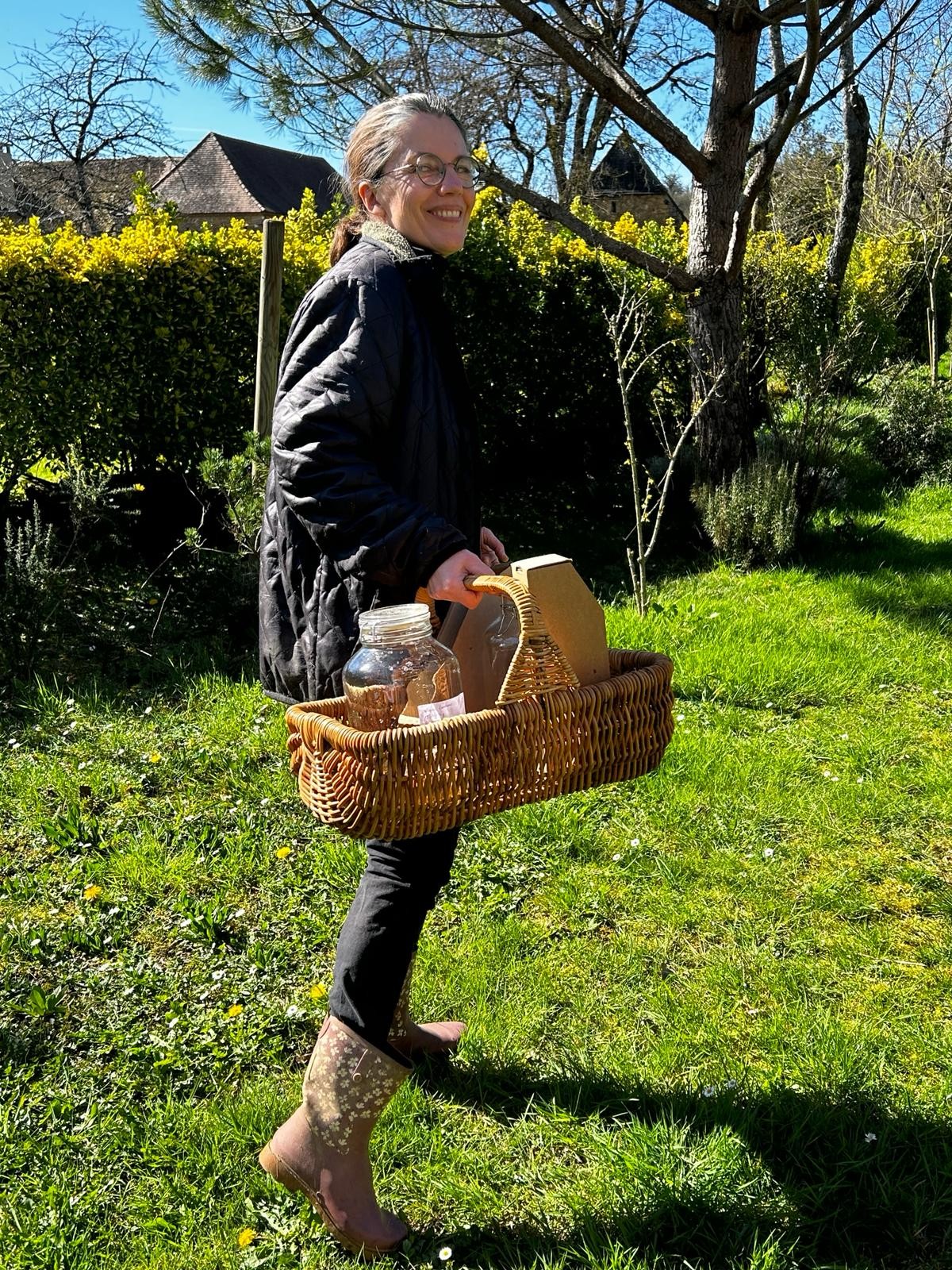
Parsimonious harvesting is carried out with deep respect for the tree. It takes place in preserved and wild areas or on certified organic land.
Only blackcurrant, walnut, and vine buds are harvested from organically grown plants.
Whenever possible, we choose proximity (Dordogne and Corrèze) to harvest our buds and young shoots.
Maceration at the Harvest Site
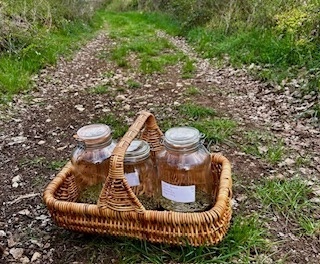
While collecting material is important, to also capture the energetic potential of the buds, they are macerated directly at the harvest site in a mixture of water, alcohol, and honey. We also pay particular attention to their degree of maturity.
A Demanding Recipe and Operating Procedure
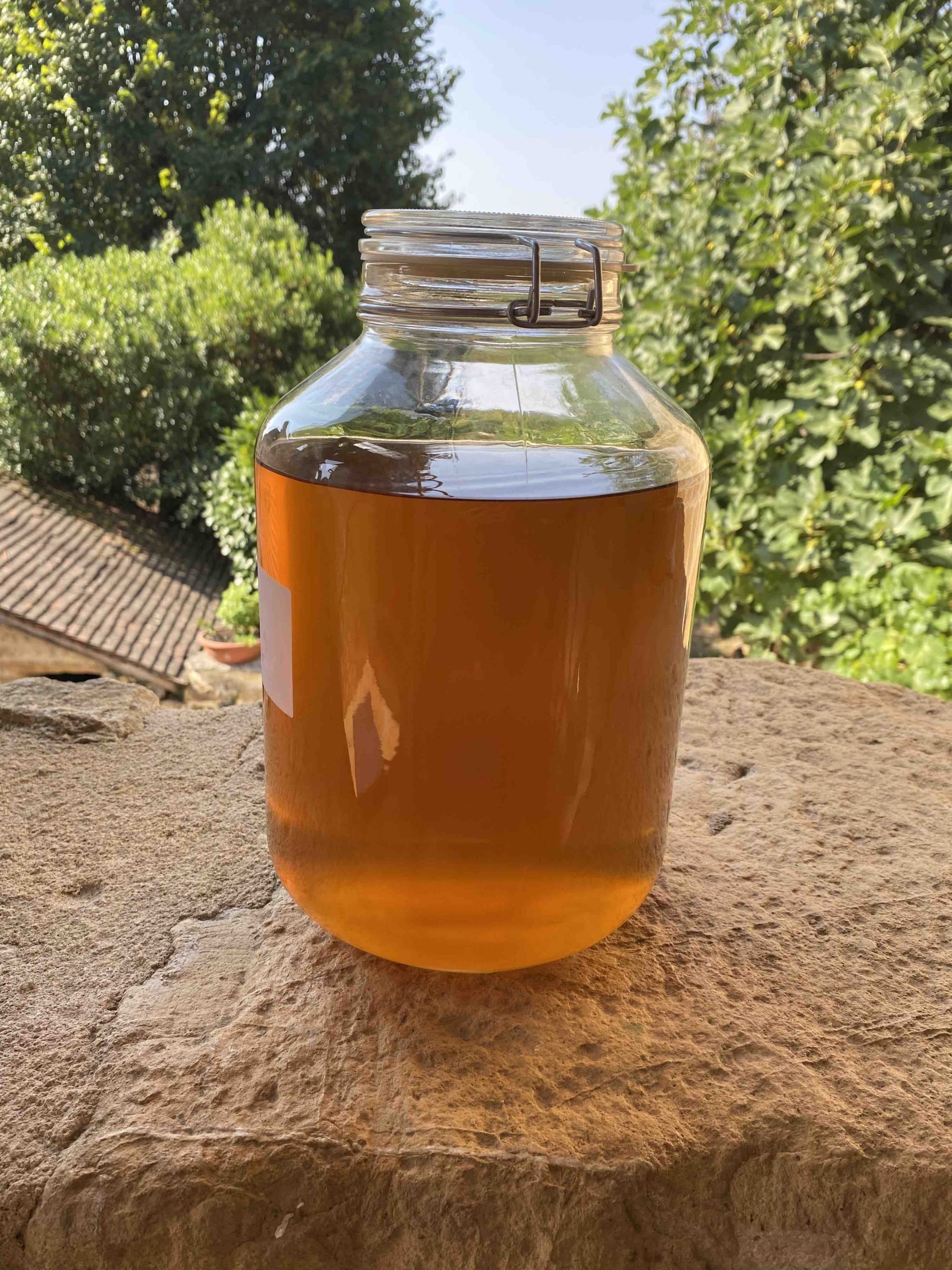
The proportions of our mother macerate: plants, water, honey, and alcohol scrupulously respect pharmacopoeia proportions. The mother macerate is obtained by gentle mechanical filtration after 40 days of maceration in glass jars, protected from light. The jars are stirred twice a day during the first 3 weeks of maceration. All plastic containers are prohibited.
The Potentiation of the Diluted Macerate
Our diluted bud macerate is obtained by diluting the mother macerate 1/10 in a mixture of water, honey, and alcohol, then manually potentiated before being packaged. This diluted macerate is called potentiated 1D macerate (1D corresponding to a 1 Tenth dilution).
Honey in our Macerates
Glycerin is the excipient traditionally used in gemmotherapy, but whether it is of plant origin or not, it is rarely free and requires an industrial production process incompatible with our requirements.
Furthermore, glycerin (food additive E422) "can cause digestive intolerances in sensitive individuals. These intolerances are due to glycerin, which is bacteriostatic and disrupts intestinal flora, especially with prolonged use" Christian Escriva "Précis de Phytothérapie".
Honey, a 100% natural health asset, allows us to overcome these constraints; bees are, moreover, our harvesting companions. Our choice naturally fell on organic acacia honey, a tree honey used in gemmotherapy, particularly due to its fluidity.
An alcohol from biodynamic agriculture
The alcohol used for our macerates is a Demeter-certified Blanche Armagnac brandy, obtained from biodynamically grown grapes, a guarantee of quality and ethical production.
Filtered, structured, and re-energized water
The vibratory dimension of our gemmotherapy led us to prefer filtered, structured (cleansed of all prior information), and re-energized water (also known as living or revitalized water). It was in Sarlat, a few kilometers from us, that we found the system that suited us: the Voda from the Vodaflor company. It is based notably on a vortex, a system developed under the impetus of Dr. Londechamp, a physician in Périgueux ("L’homme vibratoire" [The Vibratory Man] ed. amrita). The impact of this water, particularly on plant development, is remarkable, and Dr. Londechamp was also able to observe it daily in his patients.
Carefully chosen packaging
To ensure optimal protection of our macerates against light-induced degradation, while avoiding excessive cardboard packaging, we have selected Miron violet glass bottles, whose opacity helps achieve this goal. We have also opted for a dropper pipette to facilitate administration.