
Burgundy dill
La Plante
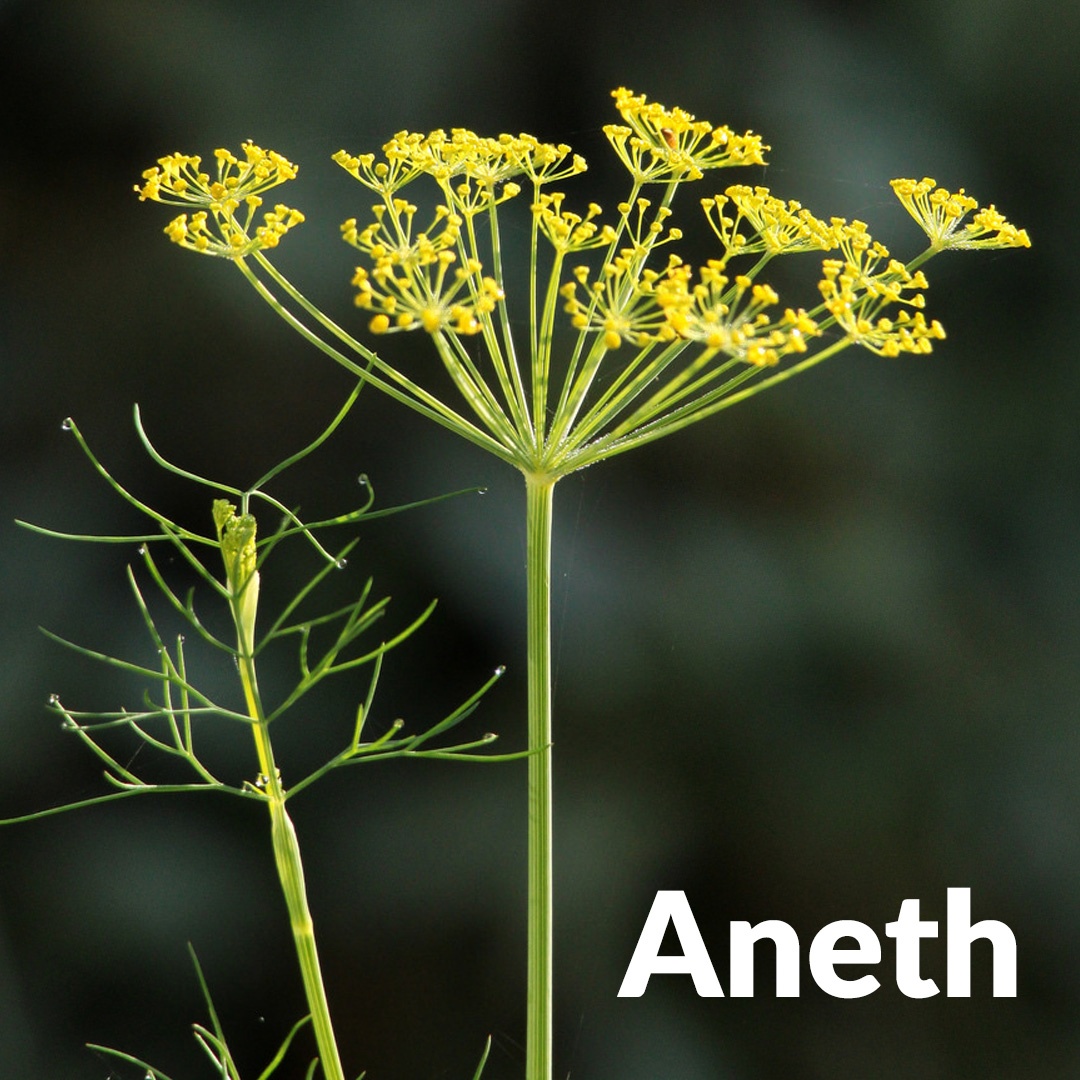
- Nom LatinAnethum Graveolens
- Partie de la planteSeed Plants
- OrigineFrance
Historically, Dill has been widely used in cooking to preserve the freshness of food. This plant has long been recognized for its virtues.
Dill is a 20-50 cm umbelliferous plant that thrives in arid soils, roadsides and waste ground. Originally from Asia Minor, Dill has acclimatized and is now cultivated in Southern Europe. At Essenciagua, we’ve chosen to focus on French production and select dill grown in Burgundy.
What are the benefits of Burgundy Dill?
The Burgundy Dill is a plant with multiple benefits for digestive health. Indeed, it helps fight bloating by promoting digestion and relieving intestinal gas. Its richness in fiber promotes intestinal transit and also makes it an effective ally against constipation.
Thanks to its carminative properties, the Burgundy Dill, relieves stomach aches and difficult digestions. Finally, this aromatic plant is also appreciated for its refreshing action that combats bad breath, leaving a sensation of freshness in the mouth.
Questions courantes
Does Dill come from Fennel?
Dill and fennel are two distinct plants. They both belong to the Apiaceae family. Fennel and dill require good sun exposure and well-drained soil.
Both are aromatic plants, easily distinguished by their appearance, smell and flavor.
How can Dill be used?
In cooking or aromatherapy, Dill can be used in several forms:
- Fresh or Dried: Traditionally, Dill leaves are used in cooking, either fresh or dried, to flavor sauces, fish, meats and salads. The seeds can be used to flavor jams and preserves.
- Essential Oil: Dill Essential Oil should be used with caution (adults only). It can be applied to the skin, diluted in a carrier vegetable oil such as Sweet Almond Oil. It can also be used orally, diluted on a carrier such as a spoonful of honey.
Dill Essential Oil is also an aromatic oil that can be highly appreciated in cooking to enhance the flavor of a salad or dish.
- Hydrolat : Dill Hydrolat contains fewer ketones than Essential Oil. It is therefore easier to tolerate.
Dill also exists in crystal, capsule or capsule form, but this use is less common
What does dill taste like?
Dill, also known as false anise, has, as the name suggests, a lemony, aniseed-like taste. It adds a touch of freshness to both sweet and savory dishes.
En lire plus sur Burgundy dill

When I have bad breath
My story It’s not pleasant at all, but sometimes I have bad breath. I hope it doesn’t happen too often. We notice bad breath in others, but it’s hard to notice it at home. And unfortunately our “friends” don’t always dare tell us… Even if the origin of bad breath is most...
Les Produits
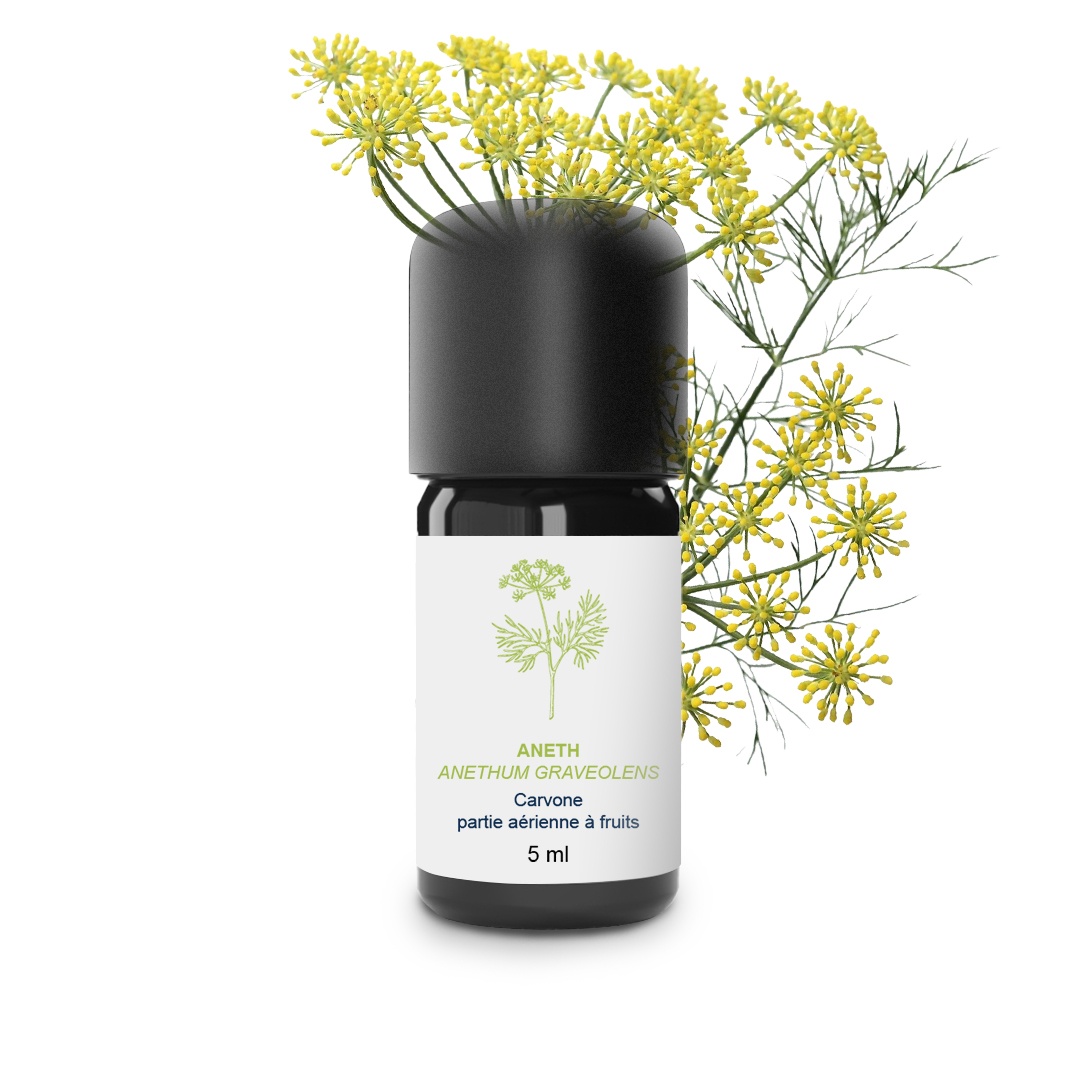
Dill Essential Oil 100% Organic and Handcrafted
Essenciagua Dill Essential Oil is an exceptional product, fully traceable and obtained by organic distillation. Extracted from Anethum graveolens, an annual...
Dill Essential Oil 100% Organic and Handcrafted