





My story
I work indoors and my current schedule means that I don’t get out much, and even less in winter. As a result, my skin has little contact with the air and natural light. As a result, I end up with dull, pale skin that lacks radiance. As I wait for the fine weather to arrive and the opportunity to enjoy the benefits of the air and the sun’s rays on my skin, I’m already giving it (and myself) a little radiance with hydrolats.
My tip
To restore radiant skin, I use wild carrot hydrosol both externally and internally. Externally, I use it every day, morning and evening, to cleanse my face on a soaked wipe. Once or twice a week, I prepare a “radiant glow” mask. To do this, I mix 2 tablespoons of red clay (or green if I don’t have any red, but red is rich in iron oxide, which brightens the complexion and stimulates microcirculation) with 1 tablespoon of wild carrot hydrosol and a few drops of apricot kernel vegetable oil. I apply this mask for about ten minutes before rinsing.
I combine this little routine with an internal cure of wild carrot hydrolate, to detoxify the liver. To do this, I take a tablespoon of this hydrolat diluted in water 3 times a day, for 3 weeks. This treatment eliminates toxins that have accumulated in the body and are responsible for darkening the complexion.
What does phytotherapy have to say?
The diuretic and hepatic properties of wild carrots have been recognized since the 16th century. Interest in its cosmetic properties came later. Naturopaths recommend carrot extracts for liver, detox and skin. Wild carrot hydrolate is entirely focused on cell renewal. Applied to the face, it regenerates, revitalizes and tones the skin. By promoting skin cell renewal, it helps care for dull, tired skin. Internally, it acts as a hepatorenal depurative, useful in “detox” cures to gently cleanse the liver and kidneys.
Did you know?
Wild carrots produce a fine, fibrous root that is not fleshy or edible. Cultivated carrots are native to the Afghanistan region. It developed a fleshy, brittle, edible root, which reached Europe over time and was then widely developed by agronomists into multiple varieties (orange, yellow, violet, white, dark pink, etc.)
I use hydrosols SAFELY
Wild carrot hydrosol is very mild; there are no contraindications to its use, either externally or internally.
DAUCUS CAROTA Wild carrot
The carrot, native to Europe, is widespread in the wild on roadsides, meadows and waste ground. Its many small flowers, usually white but sometimes pink, are arranged in umbels. As it matures, the umbel closes inwards, forming a sort of
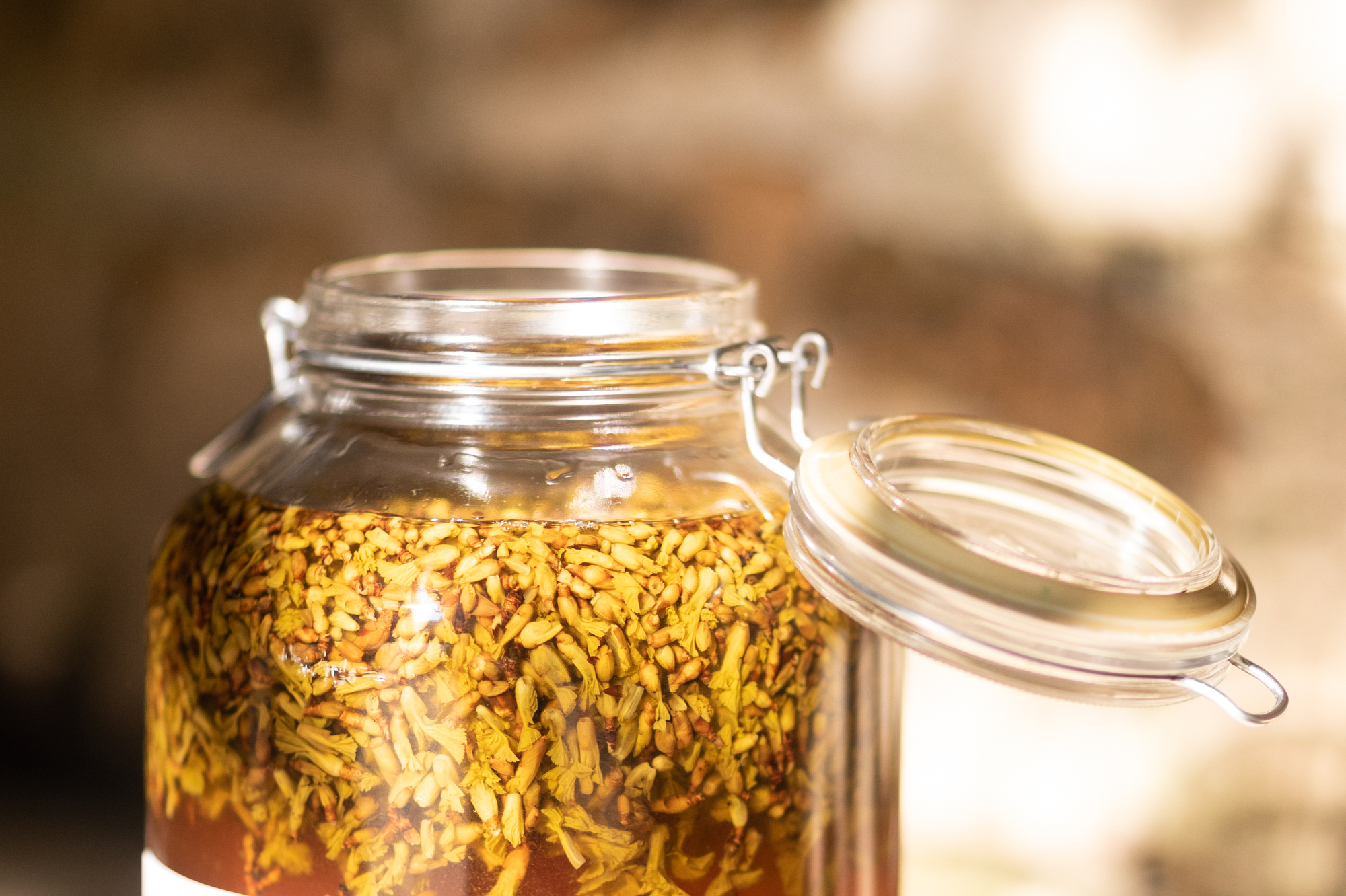
to form a kind of nest containing the seeds. It is these little nests of seeds that are harvested towards the end of August for distillation. Among umbellifers, daucus carota stands out for its original composition, mainly sesquiterpenes and sesquiterpenols. Wild carrot hydrosol has a mild smell and taste. Its main effects are on the liver, kidneys, pancreas and skin.
The Products

Wild Carrot Hydrolat 100% Organic and Handcrafted
Distilled from Daucus Carota, a plant native to Europe and widely found in meadows and roadsides, Wild Carrot hydrosol is produced by distilling the ripe seed heads harvested in late summer. Discover Essenciagua’s Hydrolat de Carotte Sauvage Bio, an artisanal, organic product focused entirely on cell renewal.
Drinking Wild Carrot hydrosol regenerates liver cells. It also acts as a hepatorenal depurative. To gently cleanse the liver and kidneys, you can follow a detox cure...
View Details