

Introduction

Herbalism is based on phytotherapy, which uses medicinal plants in a variety of galenic forms. Dry plants (herbal teas, capsules, ...), essential oils (aromatherapy), mother tinctures, bud macerates (gemmotherapy), and many other forms indeed help us to solve and prevent health disorders.
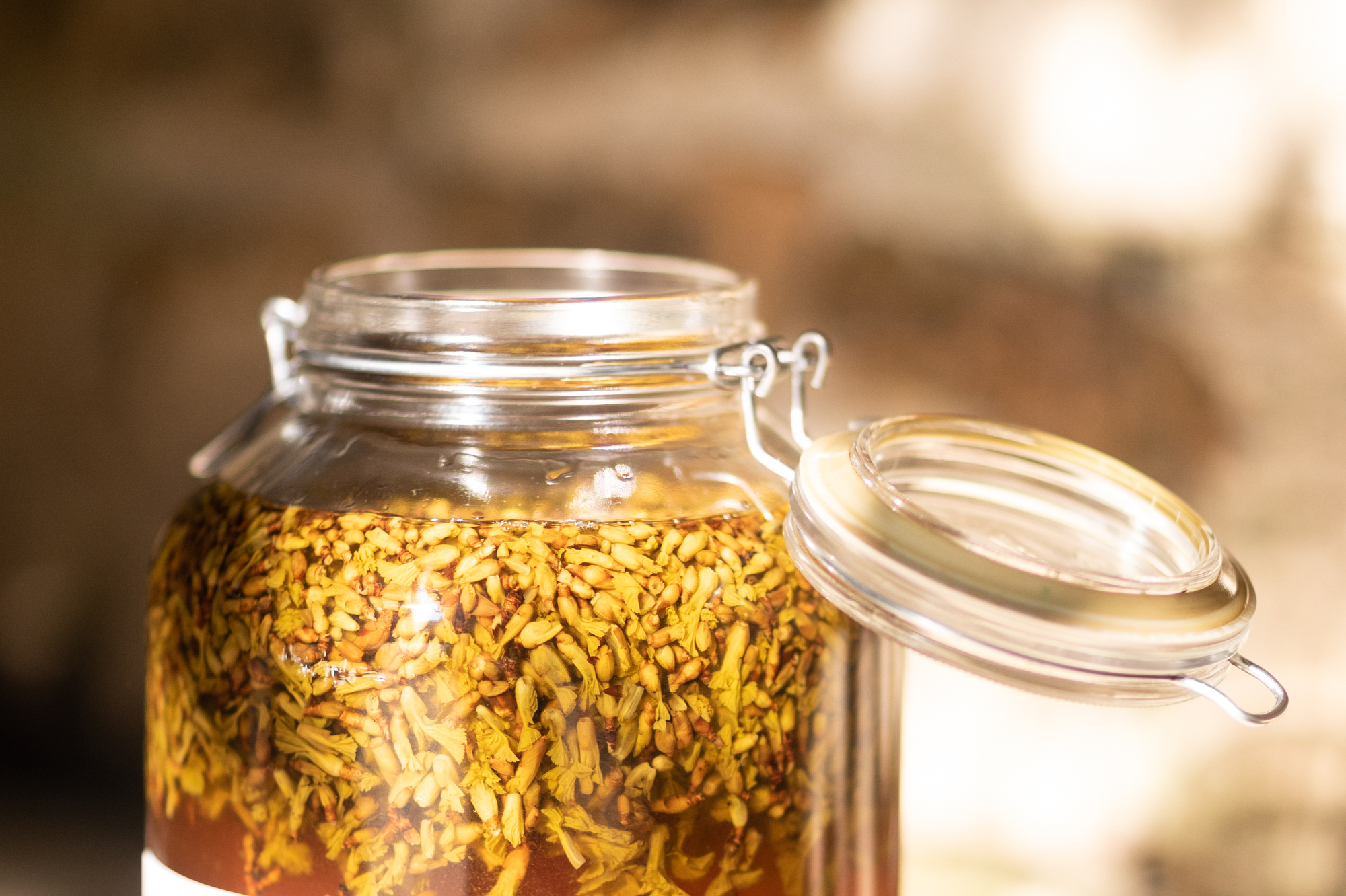
Gemmotherapy is distinguished from other forms by the use of embryonic tissues of trees . Gemmotherapy preparations are in fact made from young plant tissues (young shoots and fresh buds in particular). The benefits of bud macerates on the body are now widely recognized.
The use of buds and young shoots for therapeutic purposes is not a recent practice. Indeed, many peoples have been using them since ancient times. Chinese and Ayurvedic medicine have been using them for thousands of years. Closer to home, Hildegarde de Bingen was already recommending the use of 8 tree buds in the 12th century: birch, blackcurrant, hornbeam, chestnut, lemon, rosehip, poplar and apple. Alchemists used them to make a particularly effective spring elixir.
It would seem that Goethe's study of plants was the inspiration behind so-called modern gemmotherapy.
It was the work of Belgian physician Pol Henry (in the 1960s) that gave bud therapy, or more generally the young plant tissues of the trees and shrubs around him, its letters of nobility. He eventually named it "gemmotherapy". His practice is based on the use of bud macerates diluted 1:10. Dr. Pol Henry made the link between pathologies and blood profiles, then observed biochemical changes in his patients treated with bud macerates.
In the 1970s, Max Téteau, a French homeopathic physician, continued his Belgian colleague's research on 1:10 diluted bud macerate, but with a different approach. His studies confirmed the pharmacological superiority of buds over whole plants. He also studied the more subtle action of buds on the psyche and emotions. His work contributed to the spread of gemmotherapy, and its virtues, among his colleagues.
In the late 80s, it was Philippe Andrianne, founder of Herbalgem, who brought gemmotherapy within everyone's reach, by making a dietary supplement of the mother-macerate (undiluted bud macerate or concentrated macerate). Gemmotherapy began to gain in popularity. Its symptom-based approach helped popularize this branch of phytotherapy.
In contemporary times

In addition to a scientific approach, Christian Escriva and Stéphane Boistard now offer a more sensitive approach to gemmotherapy.
Christian Escriva, based in the Alpes maritimes and author of several books, transforms the plants he grows biodynamically, as well as wild plants. He actively contributes to gemmotherapy research, notably by expanding the list of trees concerned, and by developing a sensory approach that gives full scope to the diluted extracts he recommends.
He has also questioned the use of glycerine and opened the door to other excipients: agave syrup, grape syrup, honey, etc.
Stéphane Boistard, too, tends to distance himself from the symptomatic approach to gemmotherapy. He favors a sensitive approach, notably through a reconnection with the genius of trees and forests. He shares this approach in his book and proposes periodic videoconferences to let us hear the "Way of the Trees".
He has chosen to replace glycerine with honey in the mother macerates he produces.
We make special mention of Doctor Fernando Pitera for his "Précis de gemmothérapie", which is indeed considered a major reference.
Man cannot be isolated from his natural surroundings, and it is within this remarkable balance that the process of his well-being and healing takes place... Healing oneself with what has sprouted from the earth is the most beneficial act that can be conceived, the most intimate and effective therapeutic interaction between the forces of nature and human pathology... - Dr Fernando Pitera
Gemmotherapy has taken off. Today, there are many of us contributing to its spread, and it's a wonderful collective energy...
