



A little history
The use of essential oils began long before our time, in Ancient Egypt. Their use was sacred, medicine being attached to a belief in magic and symbols. At that time, essential oils were used in several fields: medicine, perfumery, cosmetics and embalming.
The Egyptians practiced a crude form of distillation, using maceration and wringing. Egyptian civilization is today considered the creator of essential oils. It influenced many cultures and civilizations, bringing its medical know-how to Greece, the Roman Empire and the entire Mediterranean basin.

How are essential oils made today?
Essential oils are aromatic substances extracted from plants through a process of steam entrainment - distillation - or cold pressing (citrus). Both methods can be used to produce oils, but steam distillation is more commonly used. Plants are hand-picked and harvested when their essential oil concentration is highest. The method chosen depends on the plant used and the desired quality of the essential oil.

Cold pressing
Cold pressing involves squeezing the fruit or leaves to mechanically extract essential oils known in some cases as "essences". Pressing does not produce hydrosols.

Steam distillation
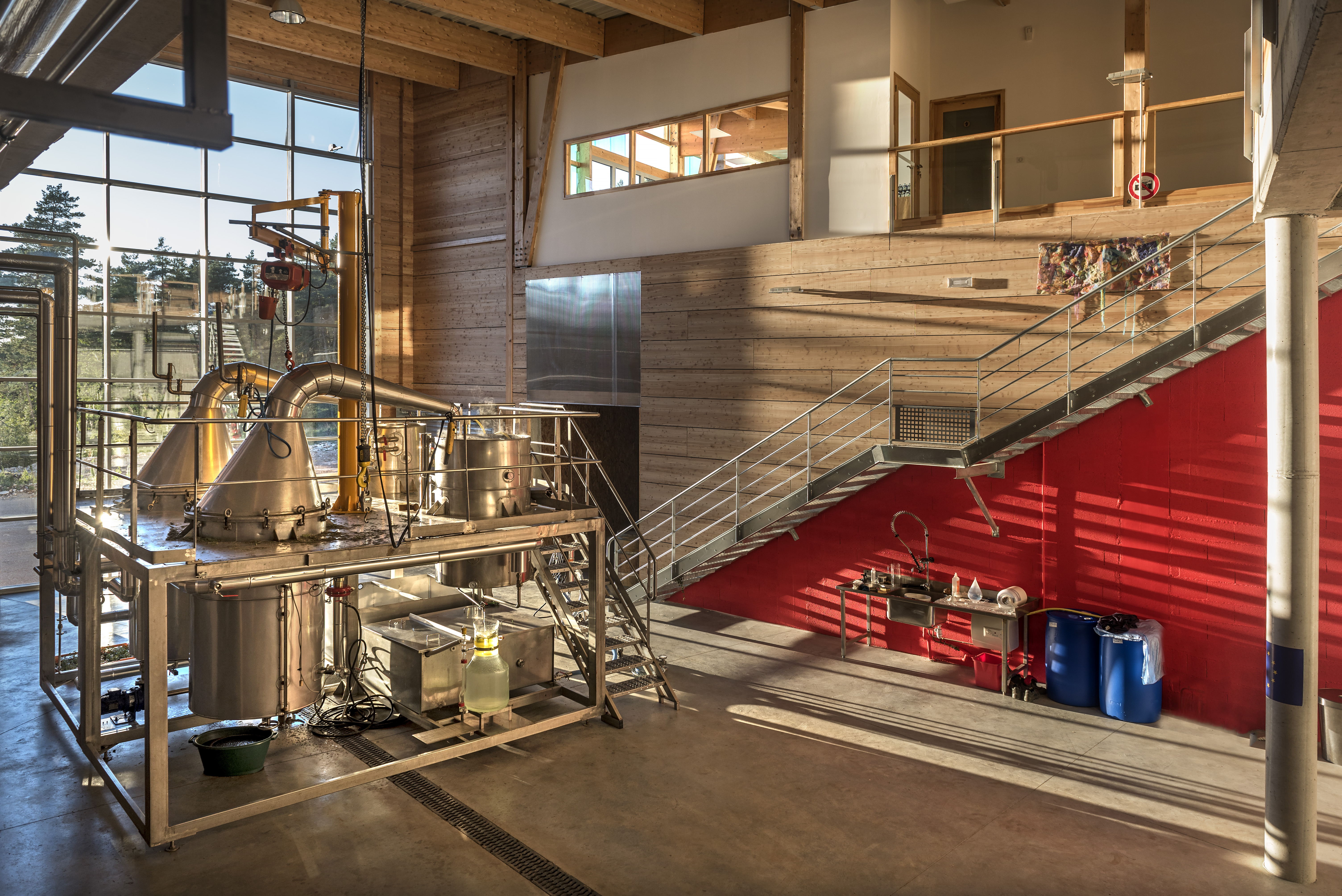
For steam distillation, the plants are packed into a still. Water vapor passes through them, entraining the aromatic volatile compounds in a gaseous state. The steam then passes through the swan neck to a cooling coil immersed in cold water.
Distillation then produces a distillate that settles by density difference and separates into essential oil and hydrolat (or floral water). The hydrolat contains a small amount of essential oil.