


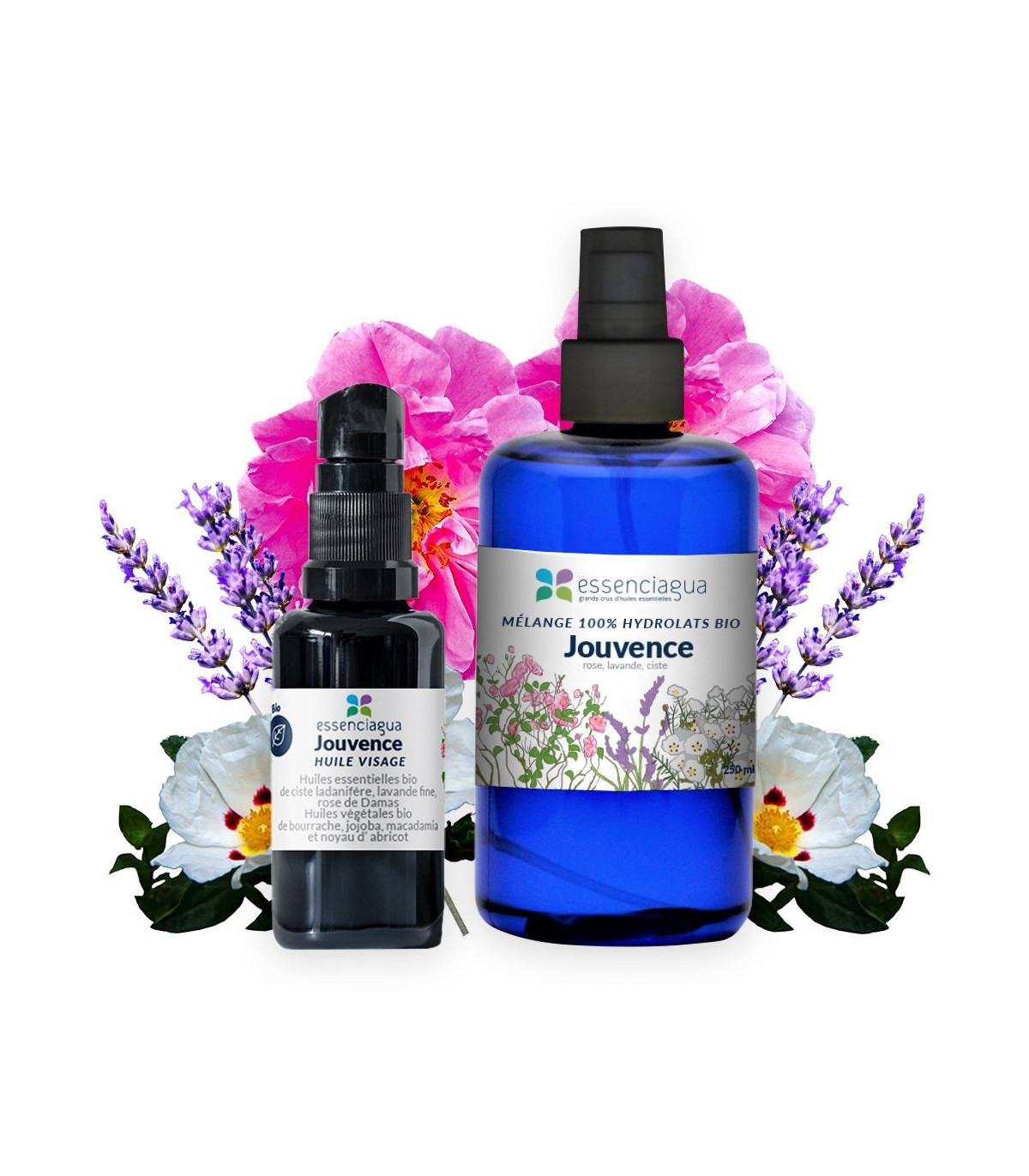

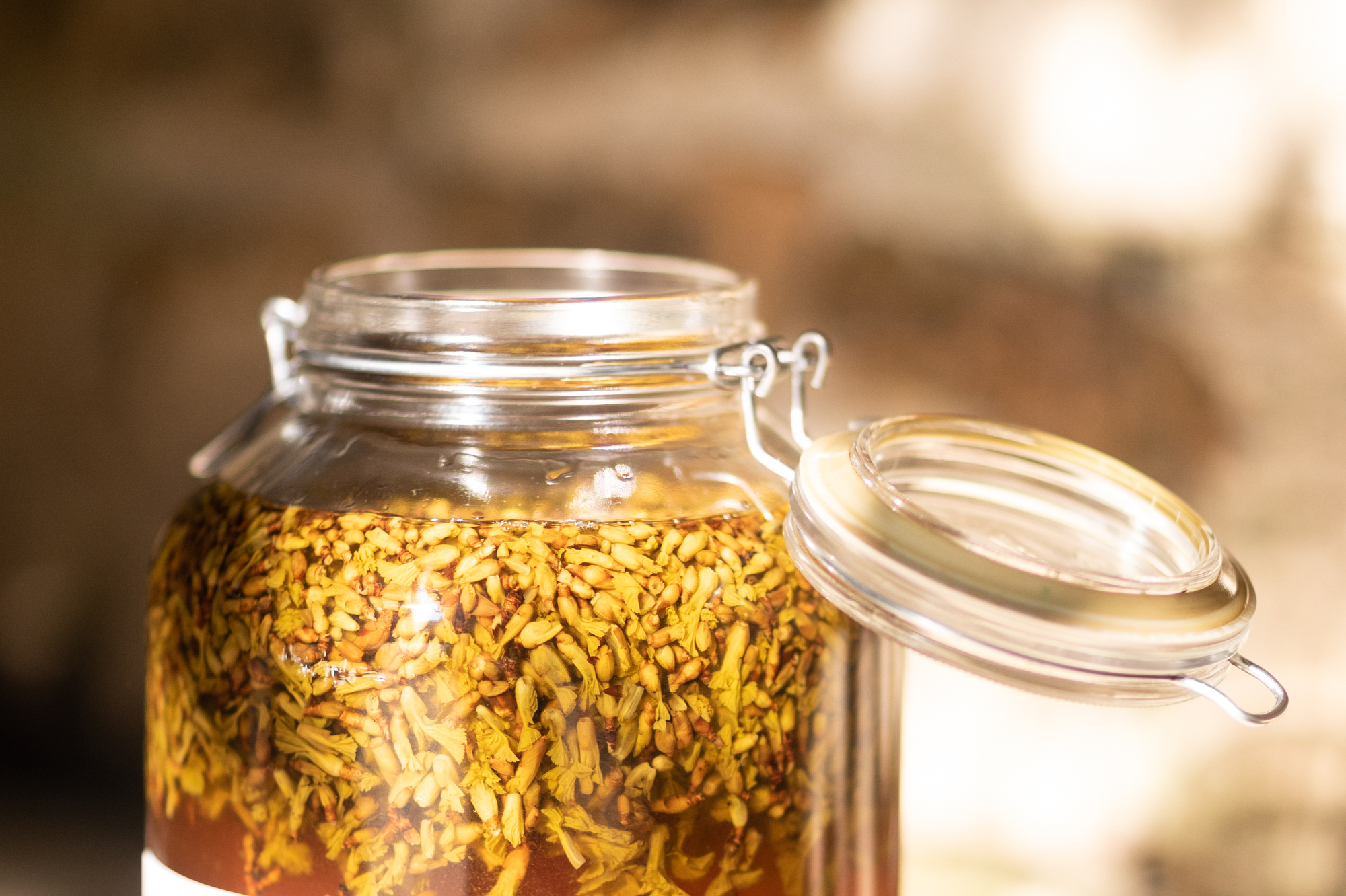
Introduction to Hydrolats and their uses

More gentle than essential oils, hydrolats do not require the same precautions for use: they can be consumed as a drink, at the rate of a tablespoon in a glass of water (hot or cold), for example, i.e. a dilution of around 1:10 in water
They are highly prized for the medicinal properties of the plant from which they are derived, taken occasionally as you would an herbal tea, or as a cure diluted in a bottle of spring water to be drunk during the day
They can be used externally: apply to the face or body during or after washing, or rub into the scalp after shampoo rinsing. They share a moisturizing effect, some more soothing, others more tonic, depending on the plant.
They can also be used in atmospheric diffusion (sprays) as a purifier or simply for their fragrant power.
Finally, thanks to the chefs we work with, we're constantly discovering their multiple potentialities in the culinary field.
What is a hydrolat?

To understand aromatic hydrolats, it's best to describe how they're obtained. Like essential oils, they are extracts derived directly from distillation. As the steam passes through the plant in the still, it picks up the aromatic compounds of the essential oil contained in the plant. This steam then carries them through the swan neck and into the coil. This is called "entrainment" with spring water vapour. All these volatile compounds then condense in the serpentine to give a distillate that flows into the florentine vase throughout the distillation process.
A part of the molecular and aromatic cocktail thus obtained then settles, usually on the surface of the florentine vase: the essential oil.
Generally below this is the aromatic hydrolat: distilled spring water enriched after decanting with aromatic active ingredients and molecules contained in the fresh plant water. Some compounds, identical to those found in essential oils, are present in lower concentrations.
Throughout the distillation process, the hydrolat, like the essential oil, is gradually enriched, first with 'light' compounds, then with heavier ones. In the end, the aim is to patiently obtain a complete cocktail. To achieve this, we homogenize the hydrosol that has run off during the entire distillation process, so that it is truly "complete", truly representative of the plant's potential.
All that's left to do is filter it before storing it in the best conditions for its proper preservation. The meticulous manufacturing process guarantees well-filled hydrosols that remain stable when the bottle is kept closed, away from heat and light.
During this long distillation process, the scent of the hydrosol evolves as the molecules are added. Its fragrance will continue to refine in the weeks to months following distillation, thanks to subtle biochemical rearrangements. No additional additives (preservatives, water, alcohol, etc.) should be added to hydrolats until their final packaging.
Purity and "AB" certification

Like our essential oils, our hydrolats are 100% pure and natural, straight from extraction. We distill the fresh plant, respecting a rule of 1 liter of hydrolat for 1 kilo of fresh plant.
NB: Currently, some 'organic cosmetics labels' recognize as a floral water a product that would have been obtained by distillation, up to 20 liters per kg of dry plant. Not to mention other additions accepted after the distillation stage...
Our hydrolats are not pasteurized or "cut" with water or alcohol, and are without added preservatives. They therefore retain the primary, edible use of a plant grown under organic farming (AB).