



The Plant

Plant part: Flowering Summit
Origin: France
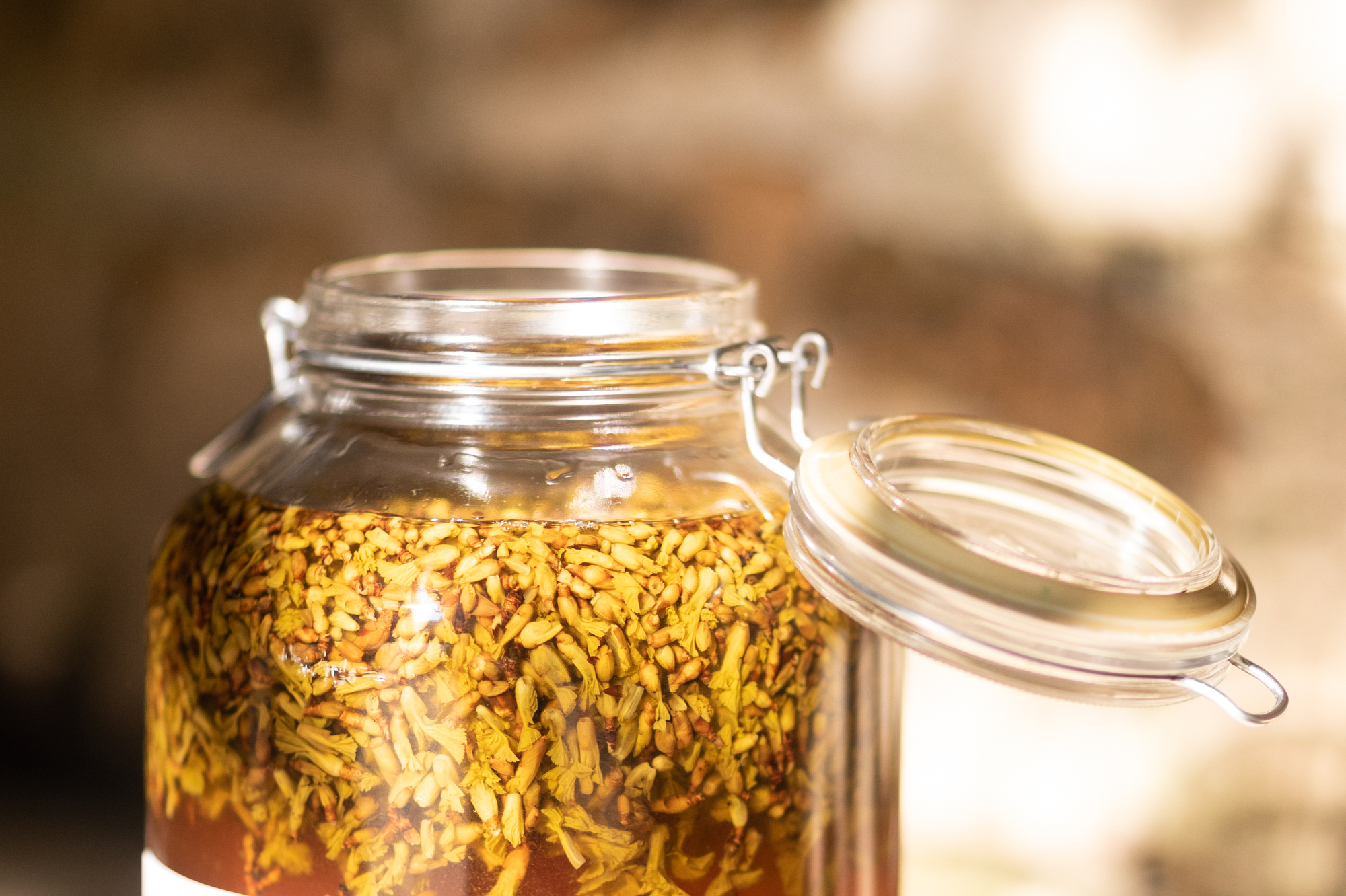
Its name is borrowed from the legendary Achilles, who, according to Greek authors, used to treat his warriors’ wounds with this perennial… Its name also derives from the way its leaves are finely cut into numerous strips, characteristic of the advanced “compositae” family, which also includes Italian Helichrysum, its Mediterranean counterpart. Yarrow’s white flower, clearly visible on our embankments, is distilled at the end of flowering, in August. Yarrow is a plant with many properties.
Harvesting and distillation are always fraught with questions, as the yield can be so low - close to that of the rose! But while the oil is often scarce, fortunately the hydrosol is no less precious. It contains mono- and sesquiterpenes, camphor and cineole.
What are the benefits of Yarrow
Yarrow is a plant with numerous health benefits. Thanks to its anti-inflammatory and antibacterial properties, it can be used to relieve respiratory allergies and rosacea-related issues. When applied topically, it helps to heal cuts and wounds, while promoting healing. Moreover, yarrow is known for its venotonic properties, making it an effective remedy for relieving varicose veins and improving blood circulation. This versatile plant can therefore be a valuable ally in treating a wide range of health problems.


Common questions
How to use yarrow
There are several ways to enjoy its many benefits
Infusion: The most traditional method is to prepare an infusion with the dried flowers of yarrow. To do this, add a tablespoon of dried flowers to a cup of boiling water, leave to infuse for 10 to 15 minutes, then strain before drinking. This infusion can be taken up to three times a day to benefit from its anti-inflammatory and digestive properties.
Essential oils: Yarrow essential oils are powerful and should be used with care. They can be diluted in a vegetable oil (such as sweet almond oil) and applied to the skin to treat cuts, varicose veins or skin inflammations such as couperose and rosacea. A few drops in a diffuser can also help relieve the symptoms of respiratory allergies.
Hydrolat : Yarrow hydrosol, also known as floral water, is milder than essential oil and can be used directly on the skin. It is particularly beneficial for sensitive skin prone to couperose and rosacea, thanks to its soothing and anti-inflammatory properties. The hydrosol can be applied as a tonic lotion after cleansing the face, or used as a compress to soothe irritated areas.
Capsules or Food Supplements : Yarrow is also available in capsule or supplement form, often in combination with other herbs. These forms are convenient for regular, controlled consumption, especially for prolonged treatments
Read more about Yarrow

The Products

Yarrow Hydrolat 100% Organic and Handcrafted
Essenciagua Yarrow Hydrosol is an exceptional natural product, known for its many beneficial properties, particularly for feminine balance, inflammation and allergies. This hydrolat is obtained through the delicate distillation of the flowers of Yarrow, a plant renowned for its soothing and repairing properties. Used regularly, Yarrow Hydrolat helps maintain a healthy hormonal balance, making it an invaluable ally, particularly during periods of stress or hormonal imbalance. Its...
View Details

Yarrow Essential Oil 100% Organic and Handcrafted
Discover Yarrow Essential Oil from Essenciagua, an organic treasure carefully distilled in France. Derived from Achillea millefolium, a plant with white flowers and a subtle fragrance, this oil is prized for its many therapeutic virtues. Recognized for its anti-inflammatory and healing properties, Yarrow Essential Oil is effective in treating a variety of skin conditions, including eczema and psoriasis. It promotes healing of scars and improves the appearance of the skin. Applied topically,...
View Details
The images of the distillation


