



Mint essential oils are among the most studied and used in modern aromatherapy. Yet the distinction between peppermint (Mentha × piperita) and spearmint (Mentha spicata) goes far beyond mere aromatic nuances. This comparative analysis, based on the latest scientific data, reveals fundamental differences that directly influence their therapeutic applications.
Botanical origins: Hybrid vs. pure species
Mentha × piperita: A hybrid with unique properties

Peppermint is the result of a natural cross between Mentha aquatica and Mentha spicata. This hybrid origin gives it a special status: it is sterile and can only reproduce by vegetative propagation. This genetic characteristic partly explains its distinctive chemical composition, absent in the parent species.
Morphologically, it is distinguished by its broad, toothed, dark-green leaves, often tinged purple on the stems. Its powerful, refreshing aroma reflects its menthol-rich composition.
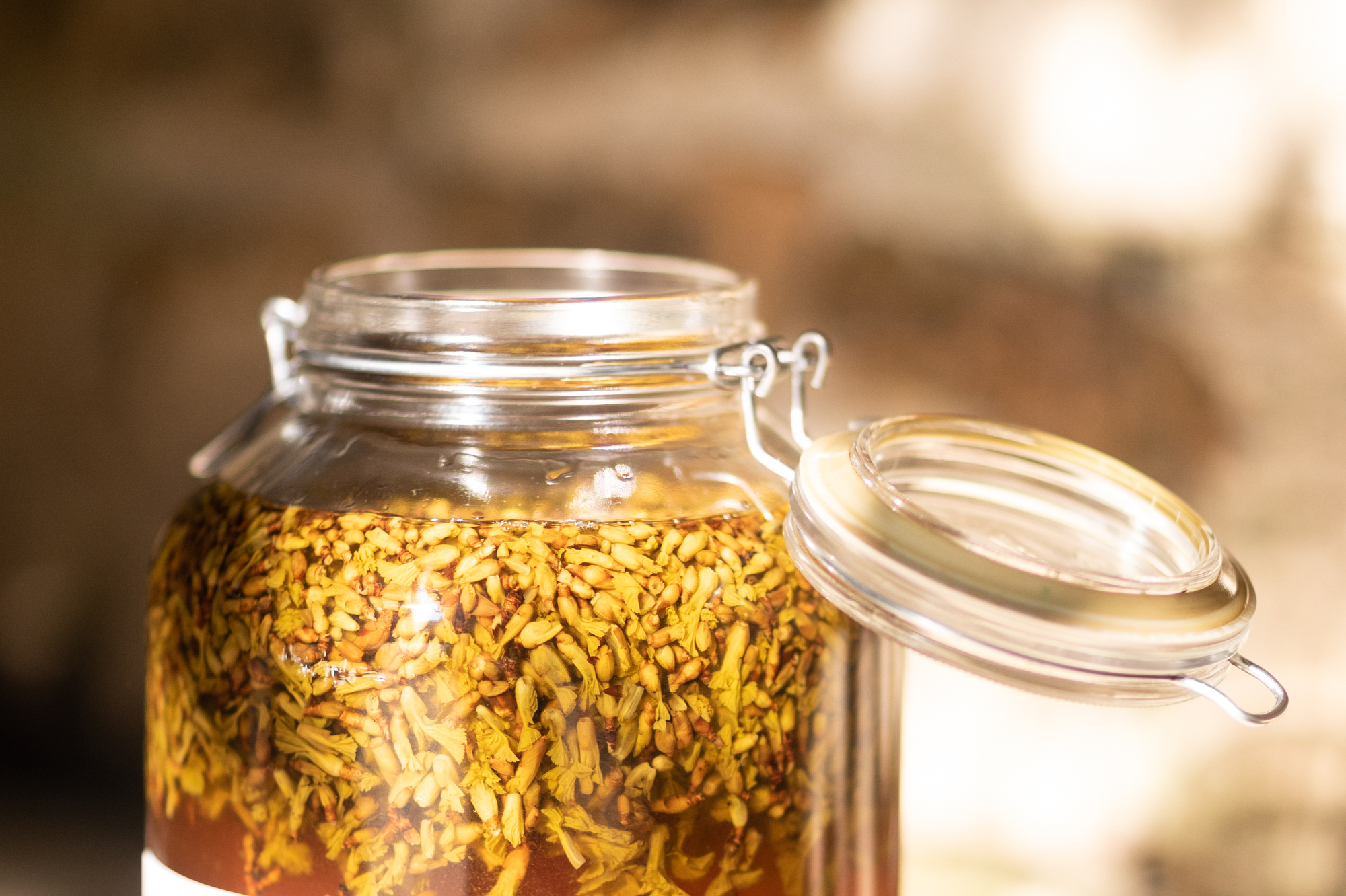
The opportunity to show you a photo of a peppermint planting we did.
Mentha spicata: A stable species with defined characteristics
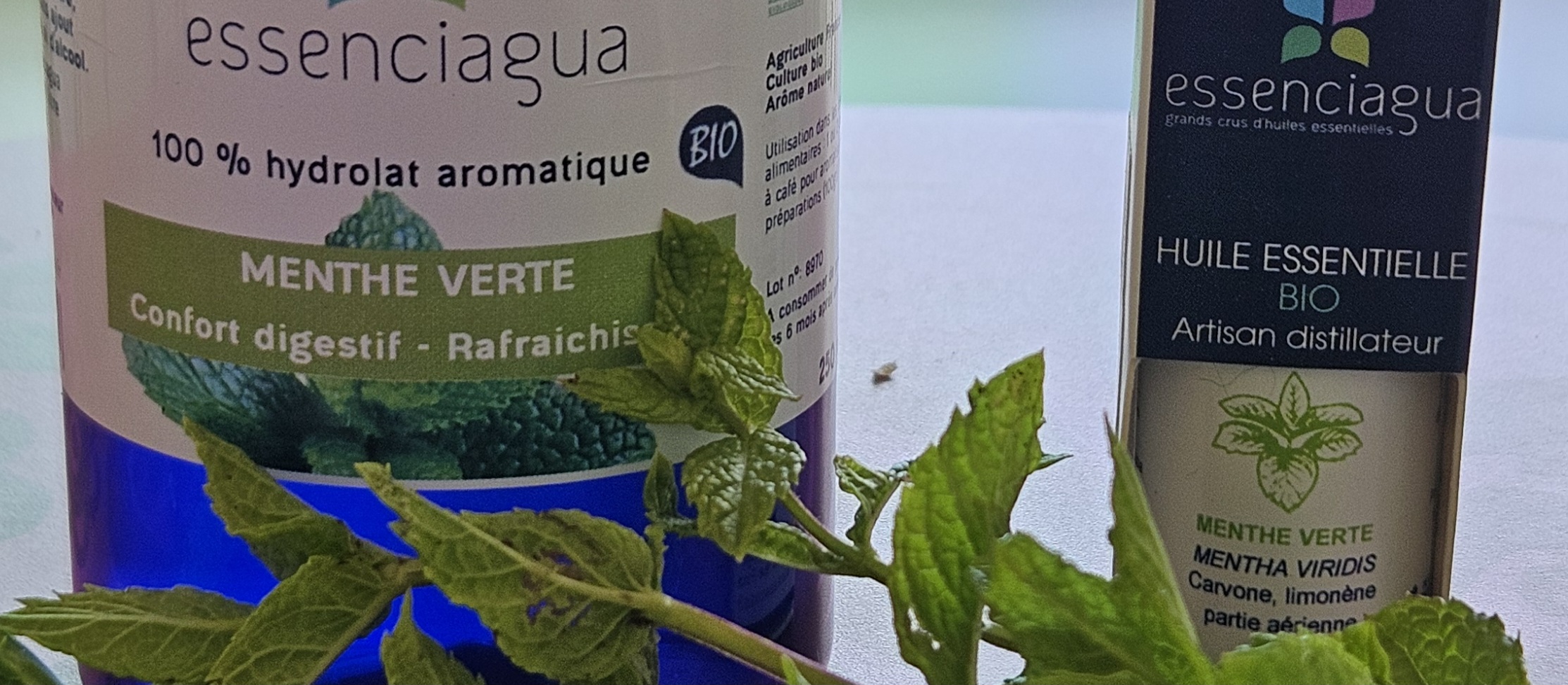
In contrast to peppermint, spearmint is a distinct species with a stable genetic profile. Its more delicate, lanceolate, softer-green leaves are accompanied by a milder, sweeter fragrance, characteristic of its high carvone content.
This genetic stability contributes to a more predictable chemical composition, though still influenced by growing and extraction conditions.
Chemical profiles: Two olfactory and therapeutic worlds

Peppermint Essential Oil 100% Organic and Handcrafted
View ProductMenthol dominance
Gas chromatography-mass spectrometry (GC-MS) analyses reveal a remarkably consistent composition in peppermint:
Main constituents:
- Menthol (32-49%): responsible for the cooling effect via activation of TRPM8 receptors
- Menthone (13-28%): contributes to antispasmodic properties
- Menthyl acetate: modifies aromatic intensity
- 1,8-cineole (variable): provides expectorant properties
- Menthofuran: compound monitored for potential toxicity
This composition rich in oxygenated monoterpenes explains the powerful pharmacological properties of this essential oil.

Spearmint Essential Oil 100% Organic and Handcrafted
View ProductThe reign of the carvone
The chemical profile of spearmint stands out clearly:
Main components:
- Carvone (40-70%): ketone responsible for characteristic aroma and antimicrobial properties
- Limonene: monoterpene with antioxidant properties
- 1,8-cineole: present in variable quantities
- P-cymene: contributes to antimicrobial and analgesic properties
- Menthol (traces): hence the lack of intense cooling effect
This predominance of carvone gives spearmint essential oil a milder but specific therapeutic profile.
Mechanisms of action and pharmacological properties
Peppermint: Multiple and powerful actions
Modern research has elucidated peppermint's precise mechanisms of action:
Documented mechanisms:
- Activation of TRPM8 receptors: menthol binds specifically to these channels, producing the sensation of cold and analgesia
- Modulation of calcium channels: action on smooth muscles, explaining the antispasmodic effect
- Inhibition of intestinal contractions: mechanism validated in the treatment of irritable bowel syndrome
- Antiemetic effect: action on the central nervous system
Validated therapeutic properties:
- Potent antispasmodic (clinical studies on IBS)
- Analgesic and local anesthetic
- Antiemetic (nausea, motion sickness)
- Respiratory decongestant
- Central nervous system stimulant
Spearmint: Sweetness and specificity of action
Carvone, the majority component, acts through different mechanisms:
Mechanisms of action:
- Interaction with microbial membranes: documented antimicrobial effect
- Modulation of oxidative stress pathways: antioxidant properties
- Moderate anti-inflammatory action: without the intense effects of menthol
- Potential antiandrogenic properties: suggested by some studies
Therapeutic properties:
- Antimicrobial and antifungal
- Antioxidant
- Mild digestive (without major antispasmodic effect)
- Mild anti-inflammatory
- Hormonal regulatory potential (to be confirmed)
Compared therapeutic applications
Peppermint: The therapeutic arsenal
Scientifically validated indications:
- Irritable bowel syndrome: efficacy demonstrated by meta-analyses
- Functional dyspepsia: significant improvement in symptoms
- Migraines and tension headaches: effective topical application
- Post-operative nausea: alternative to conventional antiemetics
- Respiratory tract congestion: proven decongestant effect
Use protocols:
- Gastro-resistant capsules for digestive disorders
- Diluted topical application (10-20%) for pain
- Inhalation for respiratory tract
- Diffusion for cognitive stimulation
Spearmint: The gentle therapy
Preferred indications:
- Mild digestive support: without the intense effects of peppermint
- Minor infections: documented antimicrobial properties
- Oxidative stress: antioxidant protection
- Cosmetic applications: pleasant fragrance, skin tolerance
- Oral hygiene: antimicrobial effect and pleasant aroma
How to use:
- Lower dilution required (1-5%)
- Atmospheric diffusion for aromatherapy
- Incorporation into cosmetics
- Culinary use (with dosage precautions)
Use safety and toxicological considerations
Peppermint: Potency and precautions
Documented adverse effects:
- Stomachburn and gastro-oesophageal reflux disease
- Cutaneous allergic reactions (rare)
- Excessive CNS stimulation at high doses
- Respiratory depression in infants (exceptional cases)
Established contraindications:
- Gastroesophageal reflux disease (GERD)
- Children under 6 years of age for oral use
- Biliary calculi (biliary stimulation)
- Known hypersensitivity to menthols
Regulatory monitoring:
- Limited menthofuran content (European directive)
- Compliance with pharmacopoeial monographs
- Purity control (absence of adulteration)
Spearmint: Favorable safety profile but vigilance required
Safety considerations:
- Generally milder toxicological profile
- Possible allergic reactions in sensitive subjects
- Carvone: ketone requiring moderate use
- Less documented drug interactions
Precautions for use:
- Appropriate dilution mandatory
- Prolonged use to be avoided without supervision
- Caution in pregnant women (ketones)
- Respect recommended concentrations
Qualitative variability and influencing factors
Factors affecting composition
Genetic variables:
- Hybrid status vs pure species
- Variability of regional chemotypes
- Differential genetic stability
Environmental influences:
- Terroir (climate, soil, altitude)
- Cultivation practices (irrigation, fertilization)
- Harvest time (phenological stage)
- Drying and storage conditions
Extraction parameters:
- Method (hydrodistillation vs. steam entrainment)
- Temperature and pressure
- Extraction time
- Post-extraction treatment
Professional selection guide
Therapeutic choice criteria
Opt for peppermint if:
- Needing a powerful antispasmodic effect
- Treatment of spastic digestive disorders
- Needing significant topical analgesia
- Applications requiring an intense cooling effect
- Patient tolerant of marked pharmacological effects
Opt for spearmint if:
- Seeking an antimicrobial effect without excessive intensity
- Cosmetic or culinary applications
- Patients sensitive to the effects of menthol
- Needing a mild, sweet aroma profile
- Prolonged or frequent use envisaged
Quality and regulatory considerations
Selection criteria:
- Organic certification and traceability
- Available GC-MS analyses
- Compliance with official monographs (Ph. Eur., USP)
- Absence of contaminants (pesticides, heavy metals)
- Appropriate packaging (tinted glass, airtight)
International standards:
- ISO standards for essential oils
- AFNOR specifications
- Cosmetic regulations (INCI)
- GRAS classifications (Generally Recognized As Safe)
Perspectives and current research
For spearmint, attention is focused on its antioxidant properties, its potential in hormone modulation, and its integration into innovative cosmetic formulations.
Conclusion
The choice between these two oils can only be made by considering all parameters: precise therapeutic indication, patient profile, administration modalities, and quality requirements. This scientific and individualized approach guarantees optimal use of these precious plant extracts, combining therapeutic efficacy and safety.
The in-depth understanding of their mechanisms of action, validated by modern research, opens the way to more precise applications and a reasoned integration into contemporary care protocols.