



The Plant

Plant part: Flowering Summit
Origin: France
St John’s Wort (Hypericum perforatum) is a perennial herb belonging to the Clusiaceae or Hypericaceae family, depending on classification. The transparent secretory pockets on the elongated leaf blades give the impression of a multitude of perforations. This is the origin of the name St. John’s Wort, which means a thousand holes.
Of all the St. John’s wort species in the Hypericum genus, St. John’s wort without the epithet generally refers to perforated St. John’s wort. Used medicinally and widely popularized for its antidepressant effects, the plant has many nicknames, the most famous of which is St. John’s wort.
While St John’s Wort is known for its beneficial effects in alleviating symptoms of mild depression, it is also highly effective in soothing skin ailments such as burns, as well as muscular pain.
What are the benefits of St. John's Wort?
The use of St. John’s Wort is a very comprehensive plant with soothing virtues on nervousness, skin irritations, and muscle pains.
In case of burns or sunburn, the local application of St. John’s Wort soothes the skin and promotes rapid healing. This plant is also known for its antidepressant properties. It helps to relieve emotional shocks and restore the balance of the central nervous system. Thanks to its regulatory action on serotonin and dopamine, St. John’s Wort is a valuable ally in fighting against anxiety and mood disorders. Used as a herbal tea or dietary supplement, St. John’s Wort is a plant with various therapeutic virtues, offering natural and effective relief for many everyday ailments.


Common questions
How to use St John’s Wort?
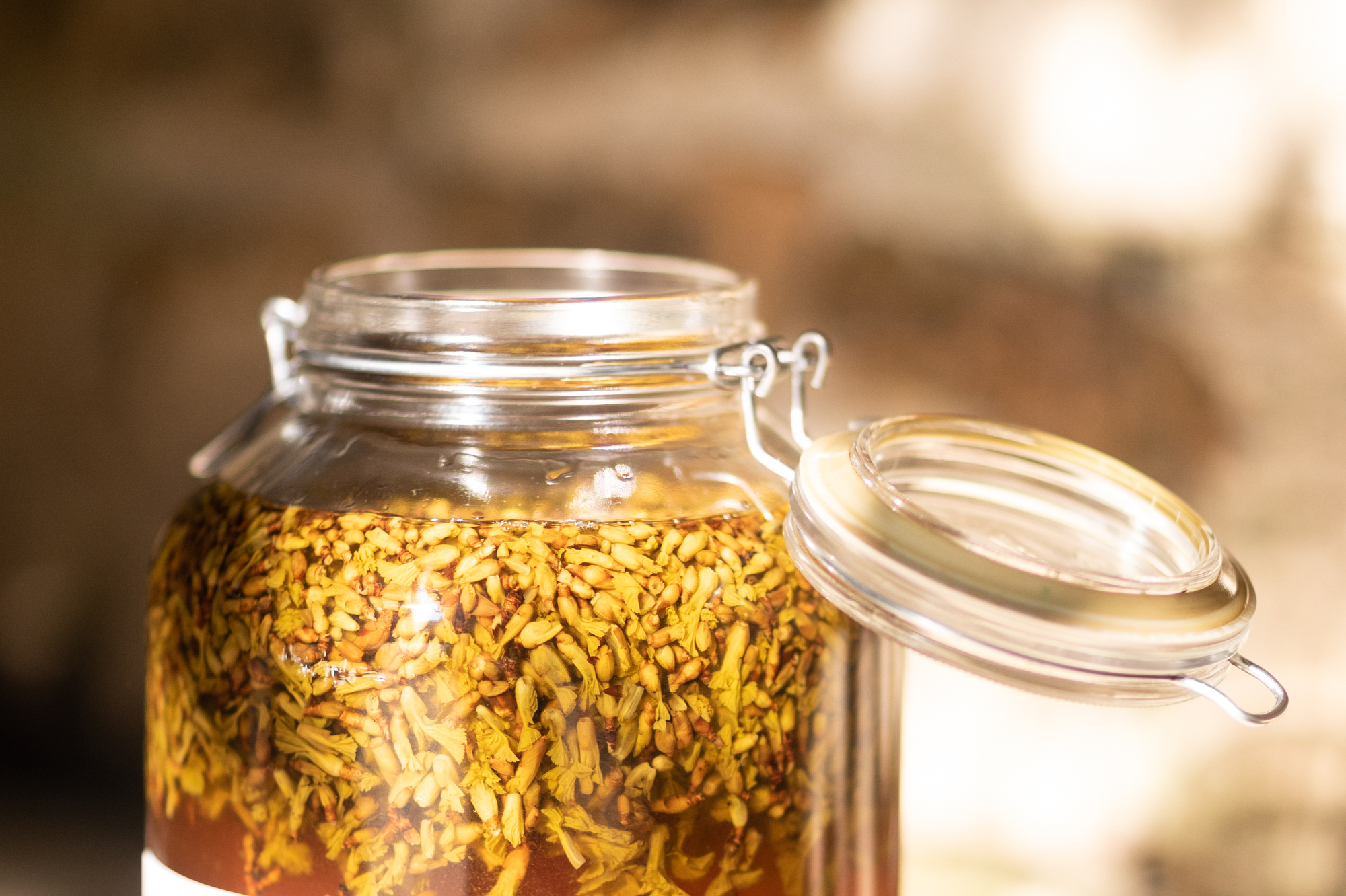
The flowering tops of St John’s Wort are renowned in aromatherapy for their soothing effects, thanks to their hypericin content. In phytotherapy and aromatherapy, it is used in various forms: - Oily macerate: St John’s Wort oil can be massaged into the skin pure or mixed with a few drops of essential oil or another vegetable oil.
-Infusion and juice: St John’s Wort flowers and leaves have long been used as an infusion. To infuse, place a handful of fresh or dried plants in a teapot, then pour in simmering water. Leave to infuse for a few minutes before drinking. Juice can also be extracted from the fresh plant and consumed on its own or mixed with other beverages.
-Mother tincture: St John’s Wort is also available as a mother tincture, notably to aid digestion.
-Tablets : St John’s Wort is also available in capsule or supplement form, often in combination with other herbs. These forms are convenient for regular, controlled consumption, especially for prolonged treatments.
The Products

St John's Wort Hydrolat 100% Organic and Handcrafted
Discover Essenciagua’s St John’s Wort Hydrosol, a treasure of well-being that soothes and comforts. Ideal for the skin, this hydrolat illuminates and revitalizes, reflecting the tranquil force of nature. Distilled in France, it is extracted from Hypericum perforatum, a herbaceous perennial plant of the Clusiaceae or Hypericaceae family. Its transparent secretory pockets on the elongated leaves give the impression of multiple perforations, hence its name meaning “a thousand holes”. This...
View Details

St John's Wort Essential Oil 100% Organic and Handcrafted
Essenciagua’s St John’s Wort Essential Oil, described as a balm for the soul, is a natural concentrate of calm and serenity. Perfect for skin care and relaxation, it embodies both the gentleness and power of nature. This essential oil is extracted from St. John’s Wort (Hypericum perforatum), a plant known for its soothing and regenerative properties. It is particularly appreciated for its calming action on mind and body, helping to reduce stress and anxiety. Its use in aromatherapy promotes...
View Details
The images of the distillation


