




What are hydrosols used for?
Hydrolats are used for a wide range of purposes, including food, cosmetics, home care and well-being.
Flavoring: as in oriental pastries (rose and orange blossom hydrosols), hydrosols can be used to flavor culinary preparations, both sweet and savory (lavender, geranium, Douglas fir, rosemary…), hot or cold, and beverages (mint, blackcurrant, verbena…).
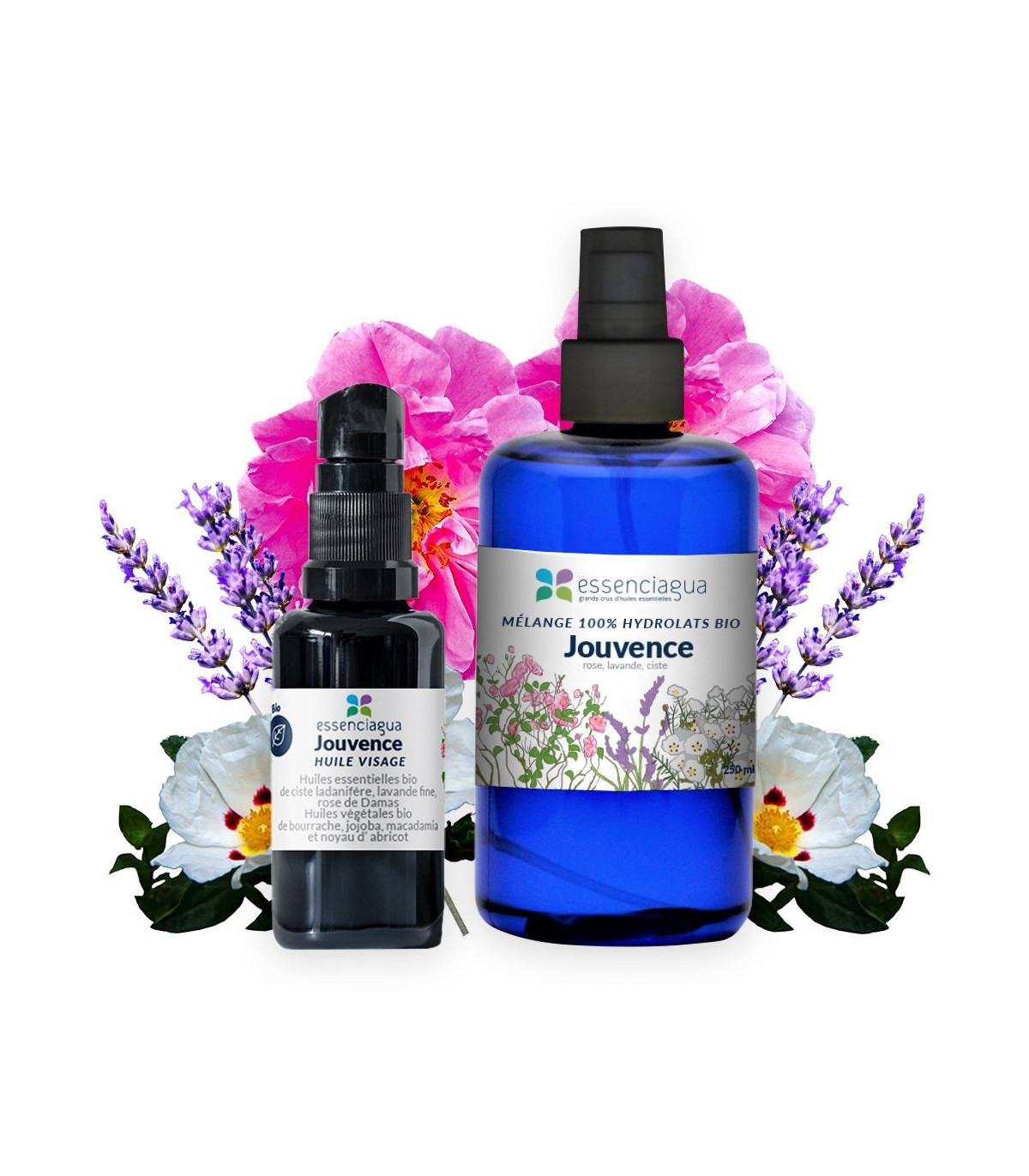
Cosmetics: very mild, they are perfectly suited to cosmetic care, as skin or hair lotions, alone or combined with other ingredients to prepare your own cosmetics (chamomile, ylang-ylang, rosemary, yarrow, rockrose, lavender, cornflower…).
Sprays or mists: very effective for sanitizing, deodorizing or perfuming spaces (Douglas fir, giant fir, verbena, lavender…). They can also repel insects (geranium, savory, pine…).
Treatment baths: perfectly soluble in water, they can be used in baths and footbaths (lavender, verbena, lemon balm, rosemary, Scots pine…).
Health care: their many therapeutic virtues make them indispensable in natural health care: anti-inflammatory (yarrow, chamomile, blackcurrant…), antibacterial (bay laurel, thyme, savory, pine…), antifungal (Douglas fir), soothing (lavender, ylang-ylang, chamomile, verbena, lemon balm…), healing (lavender, immortelle (Italian helichrysum), rockrose…), digestive (angelica, basil, dill, mint, coriander…), draining (juniper)), draining (juniper), circulatory (pistachio mastic, immortelle (Italian helichrysum), witch hazel), detoxifying (lovage, wild carrot, rosemary…), antirheumatic (blackcurrant, juniper, silver fir…), hormonal (sage, yarrow, pine…), respiratory (giant or silver fir, Douglas fir, Scots pine…), etc.
Who can use hydrosols?
In principle, everyone! Whether you’re fit, sensitive, elderly, a child or a pregnant woman, everyone can benefit from the advantages of hydrolats, with a few precautions, if necessary, depending on the hydrolat chosen and the person using it (see pages 32-33 below, especially for pregnant women and babies).
How to use hydrolats: methods of administration and doses
Hydrolats (provided they are of good quality and wholesome) can be used both internally and externally.
**Internal use / Oral use
Aqueous hydrolats are perfectly miscible with water, making them very easy to use orally. This is certainly the most effective route for therapeutic use. However, this can only be done with preservative-free hydrolats registered as “food supplements” or “natural flavors”. They can be consumed neat, but are generally diluted in water or another beverage (lukewarm or cold).
Internal use / Mouthwash and gargle )
Hydrosols are highly effective as mouthwashes, for oral hygiene, toothache, gum inflammation or pain, bad breath, and as gargles, for sore throats for example.
For mouthwashes and gargles, use 1 to 2 tablespoons of hydrosol, pure or diluted by half in water.
**External use / Skin application
Very mild, hydrosols are ideal for application to the skin or mucous membranes. They can be used: pure for skin care, as a spray or applied with a cotton pad; for more cosmetic use, either pure or incorporated into a lotion, shampoo, cream or emulsion (an aromatic “milk”, combining a hydrolat, a vegetable oil1 and, if required, an essential oil for fragrance, stability - a natural preservative - or a desired additional property).
**External use / Baths
Perfectly miscible with water and therefore easy to use, hydrolats can be poured directly into bath water (50 ml to 100 ml for a bathtub, 20 ml to 30 ml in a basin for a foot bath, very effective and water-saving). Aromatic baths are interesting for their systemic effect (soothing, toning, circulatory…), but also to contribute to skin care.
**Diffusion
Still little-known, cold ultrasonic diffusers are ideal for diffusing hydrolats, usually pure ones. Tap water and a dozen drops of essential oils are usually added. But you can also fill the tank with hydrosol and nothing else!
This method of diffusion creates a gentle olfactory ambience and allows you to benefit in a non-aggressive way from the properties of hydrolats (calming, stimulating, purifying…), which are more suitable for diffusion in a child’s bedroom, for example, than essential oils.
In the kitchen
Hydrosols are perfect for flavouring drinks, salads, soups, yoghurts, ice creams or sorbets, dishes, desserts… So you can kill two birds with one stone and benefit from the hydrosol’s properties while enjoying the flavouring. However, hydrolats can lose their olfactory and gustatory values if cooked too long or too hard. For a cooked dish, it may be preferable to add them at the end of cooking or just before serving (e.g. soup).
Dosage depends on the recipe, but do not exceed 1 tablespoon per person for an individual portion.
How to store hydrolats?
A hydrolat is an aqueous solution, which means it’s more sensitive than an essential oil and less easy to store, as it’s more susceptible to bacterial contamination.
A quality hydrolat, concentrated in active ingredients, is less likely to be contaminated. A few precautions are nevertheless necessary to limit oxidation (by air, light and temperature), which encourages the proliferation of micro-organisms.
Hydrosols should be stored in temperate conditions (no need to keep them in the fridge if they’re of good quality, but avoid subjecting them to wide variations in temperature, behind a window in the sun for example), protected from light (in a tinted bottle) and capped.
Under these conditions, a hydrolat can be kept for several years. As a precautionary measure, we recommend using them within 6 to 12 months of opening.
It’s important to remember that the scent of a hydrolat, like that of a wine, evolves as it matures. It may change, but it should remain a “planty” scent (which you may or may not like, but which does not mean that the product is good or bad). On the other hand, if an acidic or vinegary odor appears, the hydrosol has probably been contaminated and should no longer be consumed.
What are the contraindications and precautions for using hydrolats?
Hydrolats are gentler products than essential oils, and therefore do not require as many precautions.
However, while hydrolats are extremely harmless and perfectly tolerated by the skin, a few precautions should be taken with some of them, particularly internally, for pregnant women and children under 3 (hydrolats containing camphor or phenols, for example, see table p. 32-33). Precautions should also be taken for people taking medications with narrow therapeutic windows (anticoagulants, anti-epileptics…), to avoid interactions. In such cases, it is preferable to consult a qualified health professional. Finally, certain hydrolats (cinnamon, savory, thyme thymol) can cause slight, momentary skin irritation in ultra-sensitive people, or if applied in excessive doses.
Precautions for use
- Hydrolats that may cause skin tingling: exotic basil, cinnamon, incense.
- Hydrolats that may cause skin irritation in too high concentrations: cinnamon, ginger, oregano, savory, thyme thymol.
- Hydrolats that may cause liver disorders if used over long periods or undiluted in sensitive individuals: cinnamon, ginger, oregano, savory, thyme thymol.
- Slightly photosensitizing hydrolats: citrus.
Given the current state of knowledge, it is preferable in these particular situations to seek the advice of an experienced pharmacist. Similarly, hydrolates from the same plant should not be taken orally for several months without the advice of a professional.
Although hydrolats are gentle and non-toxic, they should never be used as a substitute for treatment without prior medical advice.